Survey and Feedback Form (16-G) #2 #2
• Conversations That Matter Free PDF -- The 16 Guidelines for Life are a set of universal human values which have stood the test of time since their creation more than 1,000 years ago in ancient Tibet.

• Conversations That Matter Free PDF -- The 16 Guidelines for Life are a set of universal human values which have stood the test of time since their creation more than 1,000 years ago in ancient Tibet.
Universal Declaration for Peace and Human Dignity: We, the people, recognizing our shared humanity and interconnected destiny, do hereby affirm and declare: https://empathymatters.org/now/universal-declaration-for-peace-and-human-dignity/ Universal Declaration for Peace and Human Dignity:…
Zoom Link for most of our meetings: MiamiNetwork.org/zoom We offer peer-to-peer Zoom meetings sharing: IFS, Empathy Circles, Meditation, Middle-East and Red/Blue Political & other concerns. If you are interested…
Monday :: Empathy Circle :: 8 PM ET Monday 8:00 pm ET Zoom Link : https://MiamiNetwork.org/zoom Tue-Fri :: Essene Gospel of Peace :: 6:30 PM The Essene Gospel of Peace…

Organic Self-Care Link ➡ PubMed Health Search Industrial Seed Oils: High intake of oils like canola, soybean, and corn oils, which are high in linoleic acid…

The Secret Lies In Your DNA About: A young girl ends up in foster care and she goes from home to home. She finds out her mother who raised her…

NVC for Social Change NVC for Social Change – Session #8 – Nonviolent Communication Training – Marshall Rosenberg https://anchor.fm/nvc-archive/episodes/NVC-for-Social-Change—Session-8—Nonviolent-Communication-Training—Marshall-Rosenberg-eajufc Amazon Alarm AMAZON ALARM is an initiative in partnership with GREENPEACEin…

#Cindy_Teevens #WayOfLife #EmpathyCircles #NeuroScience #EmpathyMatters #Education #Trauma #Recovery "Trauma is a fact of life. It does not, however, have to be a life sentence. ~Peter A. Levine https://youtu.be/Wn0eFE0y4gw Cindy Teevens -…
Empathy Circles and Open Source Empathy Café Would you like to speak and feel fully heard? Would you like to connect to yourself and others more deeply? Do…
Home "TO THE EDITOR OF THE NEW YORK TIMES: "A letter written by Albert Einstein in 1948, less than 24 hours after news filtered through about the Deir Yassin massacre…

Select a Quote 🌿 “The reason we’re such fertile ground for the dark forces of such lies… 🌿 “It takes courage…to endure the sharp pains of self discovery… 🌿 “Much…
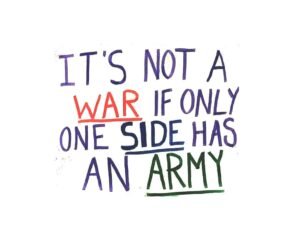
Select a Quote 🌿 ” IT is NOT A WAR IF ONLY ONE SIDE HAS AN ARMY 🌿 “ Honesty is the first chapter in the book of wisdom.…

Islands located in Papua New Guinea. The reefs here are home to over half of all the coral species in the world. Photo by Migration Media Mission Blue: https://www.facebook.com/photo?fbid=870687354411358&set=a.519009849579112 QUESTION to…

https://www.peerrespite-soteria.org/ Note: (from "social" media) https://www.npr.org/sections/health-shots/2022/08/11/1116769071/social-media-posts-warn-people-not-to-call-988-heres-what-you-need-to-know "Warm" lines are one option. They're typically staffed by "peers," people who have experienced mental health challenges. They focus less on crisis intervention…

Let Altruism Be Your Guide:by Matthieu Ricard Video Links: https://www.ted.com/talks/matthieu_ricard_how_to_let_altruism_be_your_guide?language=en https://www.youtube.com/watch?v=_p_GKCr8rq8 Week 1 Zoom Link: https://miaminetwork.org/zoom (5:54 min viideo)Our human potential for goodnesshttps://www.youtube.com/embed/_p_GKCr8rq8?start=11&end=365 So we humans have an extraordinary potential…
Trauma Sensitive Mindfulness::Dr David Treleavenhttps://www.youtube.com/watch?v=wgL20FNPLVM Former Therapist critiques process of becoming a psychotherapist:Daniel Mackler speaks: Please listen starting at the 47 minute part.... wonderful insights... https://youtu.be/c8yvva76eDc?t=2763 https://youtu.be/c8yvva76eDc?t=2763 #TAIRP #WayOfLife #EmpathyCircles #NeuroScience #EmpathyMatters #Education…
Former Therapist critiques process of becoming a psychotherapist: Daniel Mackler speaks: Please listen closely at the 47 minute point.... wonderful insights... https://youtu.be/c8yvva76eDc?t=2763 "Trauma is a fact of life. It does…

Bruce Ecker’s Coherence Therapy, can help us to make our unconscious beliefs more conscious, and then how to pair these beliefs with experiences which disconfirm or challenge (and hopefully update!) our view of reality. https://empathymatters.org/now/transformation/
• Conversations That Matter Free PDF -- The 16 Guidelines for Life are a set of universal human values which have stood the test of time since their creation more than 1,000 years ago in ancient Tibet.
This group deals with conflict transformation, peacebuilding and security and related issues at local, regional and international level. A leading network on peacebuilding and conflict transformation, counting more than 60k members. Share and retrieve the newest info on peacebuilding and conflict transformation: https://www.copese.org

The Dangers of Being Too Nice: Dr. Gabor Maté (renowned speaker and bestselling author) on another Thursday Bite-Sized Breakdown. Revisit the powerful nuggets of wisdom from our episode with Dr.…

https://www.youtube.com/watch?v=IOl28gj_RXwDr. Conti earned his MD at Stanford and did his residency at Harvard Medical School. He now runs the Pacific Premiere Group—a clinical practice helping people heal and grow from…

How can i go wrong by saving a human Life... The Significance of a Human Life... ~Adyashanti https://www.youtube.com/watch?v=-3NRqoWtIjQ https://www.youtube.com/watch?v=wharAvAsXsE How to #Understand the #Science of #EmotionsHow many years have…
Empathy, Group Identity, and the Mechanisms of Exclusion: An Investigation into the Limits of Empathy Thomas Fuchs Abstract There is a conspicuous tendency of humans to experience empathy and sympathy…
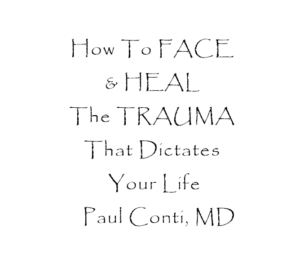
#TAIRP #WayOfLife #EmpathyCircles #NeuroScience #EmpathyMatters #Education #Trauma #Recovery "Trauma is a fact of life. It does not, however, have to be a life sentence. ~Peter A. Levine How To FACE &…
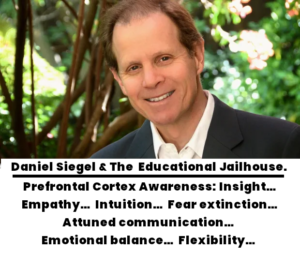
#TAIRP #WayOfLife #EmpathyCircles #NeuroScience #EmpathyMatters #Brain #Education Daniel Siegel and Educational Jailhouse Systems Prefrontal Cortex Awareness: Insight… Empathy… Fear extinction… Intuition… Attuned communication… Emotional balance… Flexibility… https://youtu.be/sv2bu2KqoyI …
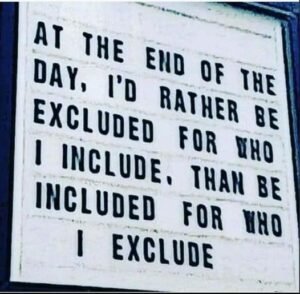
#TAIRP #WayOfLife #EmpathyCircle #EmpathicVision #EmpathyMatters Empathy, Group Identity, and the Mechanisms of Exclusion: https://empathymatters.org/now/thinking-about-things-we-cant-control-is-harmful#exclusion Why is it harmful to think about what we cannot control? "Thinking about things we can't…

Being Mindful of the GapPhillip Moffitt https://www.youtube.com/watch?v=4RhC-Cn3SoU Being Mindful of the Gap - Phillip Moffitt https://www.youtube.com/watch?v=8B6e2ca2_qw Discomfort Is The Price Of Admission To A Meaningful Life https://www.youtube.com/watch?v=8B6e2ca2_qw RANT WARNING!…

Our culture has conditioned us to avoid feelings and emotions. Susan David (in video) https://youtu.be/VIBBH-dwzJc https://www.youtube.com/watch?v=NDQ1Mi5I4rg Susan David (in video) The gift and power of emotional courage RANT WARNING! There…

Education, education, education, before it’s too late. https://www.youtube.com/watch?v=Q-wwXhbwfrAHow to spot high-conflict people before it’s too late https://www.youtube.com/watch?v=FnrVk2InT3Y We See It Too Late - Robin Williams On The Fragile Meaning Of Life
Empathy Circles A Blended Empathy Practice: Lidewij W . Niezink Empathy Circles are a hands on, walking the talk, empathy practice. The circles are based in…

When it comes to climate change, people seem more motivated by empathy for non-human others than their own self-interest. Can Empathy Help Stop Climate Change? https://greatergood.berkeley.edu/article/item/can_empathy_stop_climate_change #Climate #Empathy…

Chess databases as a research vehicle in psychology "We know that children who do not take up chess as a hobby tend to be more agreeable than those who do…

New! Truth Storytelling Gathering SPECIAL EVENT!Event description and Zoom Link posted at:PeaceAlliance.org/events/truth-storytelling/7 PM - 8:30 PM ET4 PM - 5:30 PM PTQuestions?, email:truthstorytelling@gmail.com ornancy@peacealliance.orgTo all believers in Truth, Peace, Justice &…
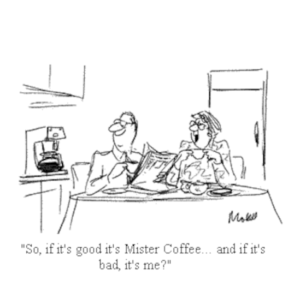
FUNDAMENTAL ATTRIBUTION ERROR: The fundamental attribution error refers to an individual's tendency to attribute another's actions to "their character" or personality, while attributing "your own" behavior to…
https://www.youtube.com/watch?v=-TqrahnSJCsHow "Offence Culture" Stifles Progress" https://www.youtube.com/watch?v=-TqrahnSJCs ..::"Trauma is when your reality is neither seen nor acknowledged" - Bessel van der Kolk ..::"Trauma is a fact of life. It does not,…
Islands located in Papua New Guinea. The reefs here are home to over half of all the coral species in the world and are essentially untouched due to the isolated…
https://www.youtube.com/watch?v=bwbvtlND3RA Dr Gabor Mate & Edwin Rutsch The History of Empathy by Susan Lanzoni Offence Culture" Stifles Progress Jeremy Rifkin Empathy is the opposite of utopia Amazing description of the…
Join us in this Democracy Circle to connect and support each other around our concerns about the invasion into Ukraine. Everyone is welcome. We especially invite Ukrainians to come and share their experiences and concerns. Come and share how you are being personally impacted by the war. #StandWithUkraine #OnTyrannyUkraine #UkraineUnderAttack #UkraineRussiaWar
*ListenFirst* Community Empathy Café :: RSVP HERE The ListenFirst Coalition and Edwin Rutsch, (Director Center for Building a Culture of Empathy, candidate for Congress and team) will host a series…

..::"Trauma is when your reality is neither seen nor acknowledged" - Bessel van der Kolk ..::"Trauma is a fact of life. It does not, however, have to be…

"On Tyranny" Democracy Circle The Lessons from On Tyranny: Twenty Lessons From the Twentieth Century, continues to be uppermost in many of our minds. We see firsthand the importance of…

A New Earth: Awakening Your Life's Purpose Eckhart Tolle presents an honest look at the current state of humanity: He implores us to see and accept that this…
????????????♂️Edwin *Empathy* Rutsch For Congress Addressing our political polarization by bridging social and political divides. ???? ???????? Support Empathy???? @EdwinRutsch @MarWilliamson ????????♂️???? Intro to the Edwin for Congress Empathy Campaign Time: 10am…
Open Source Empathy Circle Outline If you are interested in sharing with mutual empathy, in a group of equals, please join us. Everyone is encouraged to host their own empathy…
QUESTION to AI: After we stop burning fossil fuels, how long will it take for the environment to return to the pre-industrial stable Co2 levels? AI: Factors, like melting glaciers…
Monday and Wednesday Empathy Circles
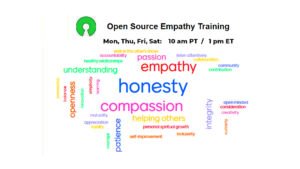
EC Timers: 3 4 5 10 15 20 25 30 60 70 80 90 More Info Time's Up! Helpful Empathy Circle Info by Edwin Rutsch : How To Circle Values…
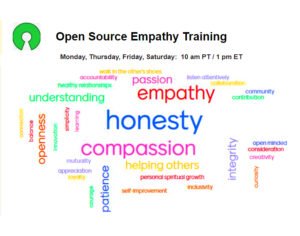
Personal Thoughts on Teaching and Learning (1952) ~Carl Rogers I wish to present some very brief remarks, in the hope that if they bring forth any reaction from you, I…

The word "schadenfreude" comes from the German "schaden," meaning damage or harm, and "freude," meaning joy or pleasure. https://www.cbc.ca/radio/sunday/the-sunday-edition-for-march-10-2019-1.5048324/why-do-we-enjoy-another-s-misfortune-author-tiffany-watt-smith-s-insight-into-schadenfreude-1.5049085 Schaden Freude :: synonyms :: sadism, sardonic see also: COGNITIVE_DISSONANCE ..::"Schaden Freude"…

NVC for Social Change - Session #8 - Nonviolent Communication Training - Marshall Rosenberg https://anchor.fm/nvc-archive/episodes/NVC-for-Social-Change---Session-8---Nonviolent-Communication-Training---Marshall-Rosenberg-eajufc

Source: https://empathart.podbean.com/ Empathy flows from that moment when we make a choice, we chose to stop, connect and listen to the heart of the other person. Exploring how to start…
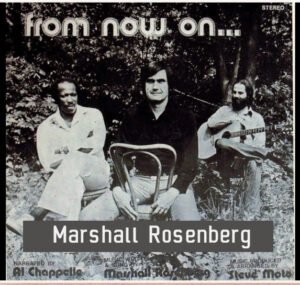
News How can i go wrong by saving a human Life... The Significance of a Human Life ~Adyashanti 4 Part NVC Process Empathy…
The amazing power of Emergency Empathy Reducing Stress - with Jon Kabat-Zinn https://www.youtube.com/embed/fx7cpWcF5Nw

Author Micah Salaberrios answers more listener questions about closure, emergency empathy, and being the only one using NVC.

Author Micah Salaberrios discusses the concept of Empathy First and answers a detailed listener question.

Author Micah Salaberrios focuses on some of the challenges of learning how to implement NVC effectively.
The insula is an underestimated brain area because it acts as a crucial hub, integrating bodily sensations (interoception) with emotions, cognition, and decision-making, linking our inner world to external reality. Often called the “fifth lobe,” it’s vital for self-awareness, feeling feelings (like hunger, pain, or disgust), emotional regulation, and learning moral/social rules, yet its deep location made it historically overlooked, though modern neuroscience now reveals its central role in mental health and addiction.
Maps and interprets internal body states (heartbeat, gut feelings) and brings them to conscious awareness, forming subjective feelings.
Generates emotional feelings, linking bodily states to emotions like disgust, fear, or empathy, and helps regulate them.
Influences choices by integrating feelings (somatic markers) with cognitive processes, helping us learn what’s rewarding or risky.
Involved in attention, working memory, and initiating intentional actions, connecting feelings to motivation.
Helps learn social norms, right/wrong, and evaluate social cues, impacting trust and interpersonal behavior.
Deep within the brain, beneath the frontal and temporal lobes, making it harder to study.
Its extensive connections to sensory, emotional, and cognitive areas make it hard to study in isolation but essential for linking systems.
Underactivity is linked to issues like addiction (craving recall), anxiety, and impaired empathy, while its role in homeostasis is crucial for overall health.
In essence, the insula is the brain’s “feeling center,” translating our body’s signals into conscious experience, guiding our decisions, and shaping our understanding of ourselves and the world, making its underestimation a significant oversight in understanding human experience and disorders.
For Rogers, empathy is sensing the client’s inner world “as if” it were one’s own, including the felt meanings and emotions, while still knowing it is the other person’s experience, not one’s own. It involves carefully communicating this understanding and checking back so that the client recognizes their own experience in what is reflected, which helps them feel deeply understood and facilitates change. (via acceptance)
Within Carl Rogers’ person-centered framework, a therapist’s own unarticulated inner experience, or internal incongruence, would be the potential source of PROJECTING feelings or biases ONTO the client.
Rogers emphasized the therapist’s core condition of congruence (or genuineness) as essential for therapeutic personality change.
Congruence means the therapist’s inner and outer experiences are aligned. The therapist is aware of their internal feelings and, if appropriate and helpful to the client, is transparent about them within the relationship.
Incongruence for a therapist would be having internal feelings (e.g., judgment, frustration, personal reactions) but hiding them behind a “professional façade”.
When a therapist is incongruent and not fully aware of or processing their own internal, unarticulated feelings, those feelings could implicitly or unconsciously influence their interactions, leading to a form of projection or an inability to offer genuine empathy and unconditional positive regard. This might manifest as subtly guiding the client, making interpretations, or signaling judgment, which would raise the client’s defenses and hinder their self-exploration.
Therefore, self-awareness and, when therapeutically relevant, the appropriate articulation of the therapist’s experience (transparency) are key in the Rogerian approach to avoid imposing the therapist’s own internal world onto the client.
====
Carl Rogers did NOT advocate guessing or imposing a feeling label from a pre-set “LIST” if the speaker had NOT conveyed that feeling, either in words, tone, or clear implication. Instead, he emphasized tentatively reflecting the feeling that seems present in the speaker’s actual message, and then checking its accuracy with the speaker.
Rogers on active listening
Rogers described the listener’s task as grasping both the facts and the feelings in what is heard, not inventing or supplying feelings the speaker has not expressed. He contrasted this with more interpretive approaches that project meanings and dynamics onto the speaker, which he warned can increase defensiveness and inhibit real expression.
Feelings reflection, NOT guessing
In Rogers-style reflective listening, the listener attends to the “total meaning” of the message, including tone, posture, and other nonverbal cues, and then responds especially to the feeling component that is actually manifest in the communication. When the listener reflects a feeling, it is meant as a careful, non-evaluative hypothesis about what the speaker is already expressing, not a speculative guess pulled from an abstract list of emotions the speaker has never indicated.
https://www.perplexity.ai/search/in-active-listening-what-did-c-D42hS8shTk29OFWloNGtzA
https://lifebuilderscounseling.org/wp-content/uploads/activelistening.pdf
https://r.jordan.im/download/psychology/arnold2014.pdf
Active listening does not necessarily mean long sessions spent listening to grievances, personal or otherwise. It is simply a way of approaching those problems which arise out of the usual day-to-day events of any job.
https://wholebeinginstitute.com/wp-content/uploads/Rogers_Farson_Active-Listening.pdf
How does Rogers distinguish empathy from interpretation of feelings
https://www.perplexity.ai/search/how-does-rogers-distinguish-em-K4NQMqWGR3K8H3YI8hsSGA
Rogers treats empathy as an accurate, moment‑to‑moment entering of the other person’s experiential world, and he contrasts this with interpretation, which adds meanings or motives that go beyond what the person is actually expressing. Empathy stays close to the client’s “internal frame of reference,” while interpretation moves toward the helper’s theory, assumptions, or inferences about what the client really feels or means.
What Rogers means by empathy
For Rogers, empathy is sensing the client’s inner world “as if” it were one’s own, including the felt meanings and emotions, while still knowing it is the other person’s experience, not one’s own. It involves carefully communicating this understanding and checking back so that the client recognizes their own experience in what is reflected, which helps them feel deeply understood and facilitates change.
How interpretation differs
Interpretation, in contrast, involves the listener offering an explanation, hidden meaning, or deeper feeling that the client has not clearly expressed, often drawing on diagnostic or theoretical ideas. Rogers warned that this kind of interpretive stance can make the client feel analyzed or judged, increase defensiveness, and shift the focus away from the client’s lived experiencing toward the therapist’s concepts.
Key elements of the distinction
Empathy tracks the client’s explicit and implicit meanings and feelings as they emerge, staying within what the client is actually communicating.
Interpretation goes beyond that communication, proposing “what is really going on” psychologically, even if the client has not signaled it.
Rogers framed effective helping as privileging empathic understanding and accurate reflection over interpretive moves, especially early in the relationship.
The fundamental attribution error is the psychological tendency to overestimate the role of personality and underestimate the role of situational factors when explaining another person’s behavior.
For example, one might assume a coworker who is late is lazy, without considering that they might have faced a significant traffic jam or a family emergency.
How it works
Internal vs. external factors: We tend to attribute others’ actions to their internal characteristics (like their personality or beliefs), while overlooking external, situational pressures (like a bad day or a stressful environment).
Self vs. others:
We often make this error when observing others, but we are less likely to do it to ourselves because we are more aware of the external circumstances influencing our own actions.
Impact on judgment:
This bias can lead to unfair judgments, strained relationships, and misunderstandings because we are not considering the full picture of what is influencing behavior.
Example
Observing a driver: You see a driver swerve and assume they are a “jerk” or a “bad driver”.
Considering situational factors:
However, the fundamental attribution error occurs if you don’t also consider that the driver might be rushing to a hospital or dealing with a sudden medical emergency.
** Workplace scenario:**
A manager might believe an employee’s missed deadline is due to incompetence, without considering the possibility of insufficient resources or unclear instructions from the company.
..::”Nobody in the world, nobody in history, has ever gotten their freedom by appealing to the moral sense of people who are oppressing them.
Assata Shakur