

NVC is about connecting with ourselves and others from the heart. It’s about seeing the humanity in all of us. It’s about recognizing our commonalities and differences and finding ways to make life wonderful for all of us. https://www.cnvc.org
workplace Work-place work Work Workplace
The Conflict: Empathy vs. Managerial Action
Carl Rogers’ person-centered approach (PCA) in a workplace setting encounters significant challenges when dealing with traditional management practices, particularly regarding disciplinary actions like firing an employee. The core tension lies between the manager’s need for performance metrics and the PCA’s emphasis on trust, empathy, and unconditional positive regard.
Managers often operate from a framework of performance, efficiency, and clear standards, where removing an underperforming or non-compliant individual is a necessary solution for the team’s overall productivity. This is a results-oriented, often “biomedical” or “mechanistic” approach to organizational health.
Rogers’ approach, in contrast, posits that an environment of unconditional positive regard (accepting individuals without judgment), empathy, and congruence (genuineness) is necessary for people to feel safe enough to grow, self-actualize, and find their own solutions. In the specific scenario you described:
Manager’s Perspective: Removing an individual is a necessary managerial function (a “gatekeeping” role) to maintain standards and ensure the team’s success.
Rogers’ Perspective: Unconditional acceptance and empathy are paramount for fostering a secure environment. Terminating someone without fully understanding their perspective, involving them in the solution-finding process, and providing an environment for potential growth would violate the trust of the entire group. The remaining employees would perceive a lack of fairness and a risk to their own security, leading to a breakdown in psychological safety and trust.
https://pmc.ncbi.nlm.nih.gov/articles/PMC8950126/#:~:text=5.,as%20a%20barrier%20to%20PCC.
roadblock road-block roadblocks road-blocks
What Active Listening is not:
-
- Jumping in with “help” in the form of “good advice”
- Questioning to get at the “facts”
- Reassuring to make them “feel better”
Simply put,
roadblocks take the conversational ball
out of the speaker’s hands
and puts it firmly into the listener’s.
The 12 Roadblocks to Communication:
https://www.gordonmodel.com/work-roadblocks.php

🌱 IFS & Peace 🌿 See Chat
See Chat
🌱 IFS & Projection 🌿 See Chat
Question: Why do we humans project our unconscious “parts” onto other human beings, while not even seemingly noticing that we are doing that?
Answer: This phenomenon touches right at the heart of human psychology and our relational patterns.
From an IFS perspective, we project our unconscious parts onto others because these parts carry burdens that feel too painful, threatening, or overwhelming to acknowledge directly.
Think of it like this: when we have an exile carrying deep hurt or shame, or a manager/firefighter working overtime to keep us safe, these parts operate beneath our conscious awareness.
They become like shadows that we don’t even realize are there.
Here’s the fascinating part – our psyche is actually trying to protect us!
When we can’t bear to hold certain feelings or beliefs about ourselves, our system “outsources” them onto others. It’s much easier to see these qualities in someone else than to face them in our own inner world.
This creates what we might call “psychological blind spots” – we genuinely aren’t aware we’re doing this because the parts doing the projecting are themselves unconscious.
The process is almost like our internal parts are constantly asking: *”How can I keep this person safe from pain?”* And sometimes their answer is: *”By making sure they see the problem as ‘out there’ rather than ‘in here.'”*
This is where the beautiful work of making unconscious beliefs more conscious comes in – as mentioned in approaches like Coherence Therapy. When we develop what we might call a “harmony mindset” rooted in empathy, we begin to question our automatic judgments.
We start asking ourselves: *”What am I protecting myself from seeing? What part of me is being triggered right now?”* Carl Rogers’ concept of active listening becomes crucial here – when we truly listen to others (and ourselves) with curiosity rather than judgment, we often catch glimpses of these projections.
The key is approaching both our inner experience and others’ with genuine compassion.
The good news?
Every time we recognize this pattern, we’re reclaiming our projection and bringing it back into our own system where it can be witnessed, understood, and eventually unburdened.
It’s like taking back borrowed energy that was never ours to carry in the first place.
🌱 IFS & The 8 C’s 🌿 See Chat
The 8 C’s in IFS represent qualities of the Self – your core, wise essence that naturally emerges when you’re in Self-leadership:
1. **Curiosity** – Genuine interest in understanding your parts without judgment
2. **Compassion** – Deep caring and kindness toward all your parts
3. **Calm** – Peaceful, centered presence even amid inner turmoil
4. **Clarity** – Clear seeing of what’s happening inside
5. **Confidence** – Trust in your ability to navigate internal experiences
6. **Courage** – Willingness to face difficult feelings and memories
7. **Connectedness** – Feeling linked to others and something greater
8. **Creativity** – Access to new solutions and possibilities When you lead from Self rather than from your parts, these qualities naturally arise.
For example, instead of being overwhelmed by an anxious part (which might make you act from fear),
Self-leadership allows you to approach that part with curiosity and compassion.
These Self qualities are essential for healing – they create the safe, trusting environment parts need to share their burdens and eventually let them go.
They also model how we might approach global conflicts: with curiosity about different perspectives, compassion for all involved, and the courage to find creative solutions together.
"The finest emotion of which we are capable is the mystic emotion. Herein lies the seed of all art and all true science. Anyone to whom this feeling is alien, who is no longer capable of wonderment and lives in a state of fear is already dead.
~Albert Einstein
🌺🌺🌺
..::"For me, the Jewish religion, like all others, is an incarnation of the most childish superstitions... And the Jewish people have no different quality for me than all other people".
🌺🌺🌺
Einstein viewed the "cult of individuals" as unjustified and often in bad taste, noting that it was unfair to select a few for "boundless admiration" while ignoring everyone else.
(He explicitly stated he could not see anything "chosen"
about Jewish people)
”Refusing humility traps you in delusion.
One and the same.
~Marshall Rosenberg
🌺🌺🌺
“Nothing is more despicable than respect based on fear.”
🌺🌺🌺
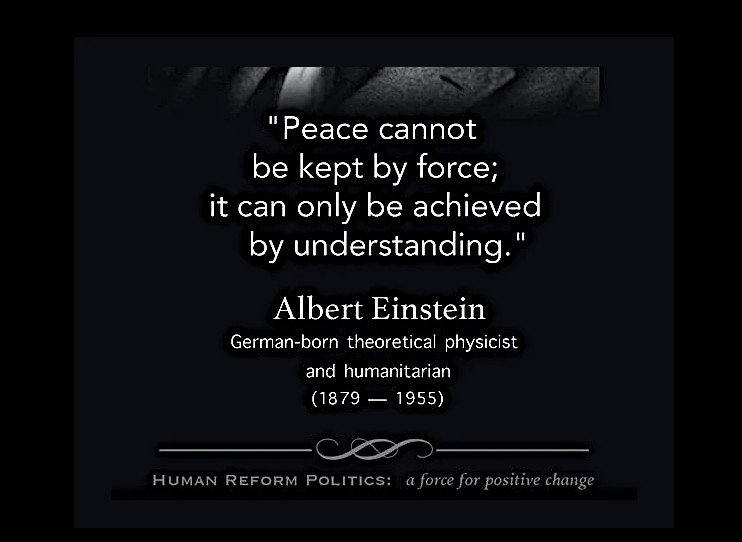


Imagine living on the only known planet in the infinite universe, where the mortified rich get richer by colonizing the people to follow debunked dogma, repeating an ancient doctrine of war, projected onto innocent children, again and again, the rich get richer, and the children inherit a brutal indoctrination instead of Living Sacred Life. https://empathymatters.org/armageddon/
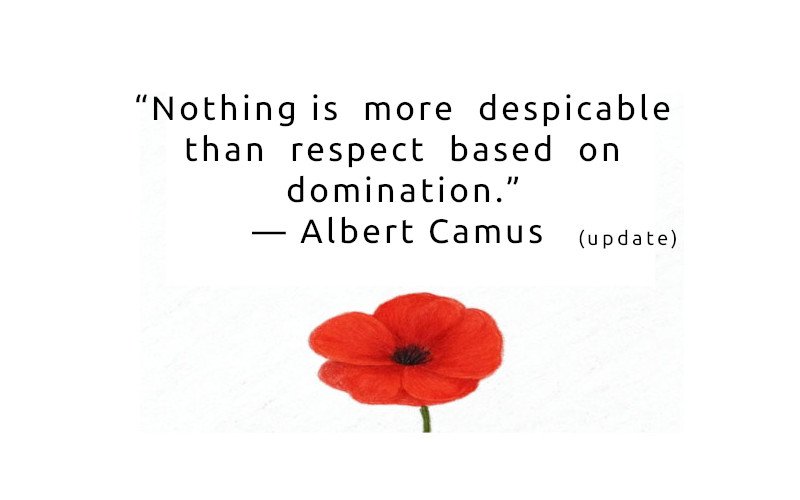
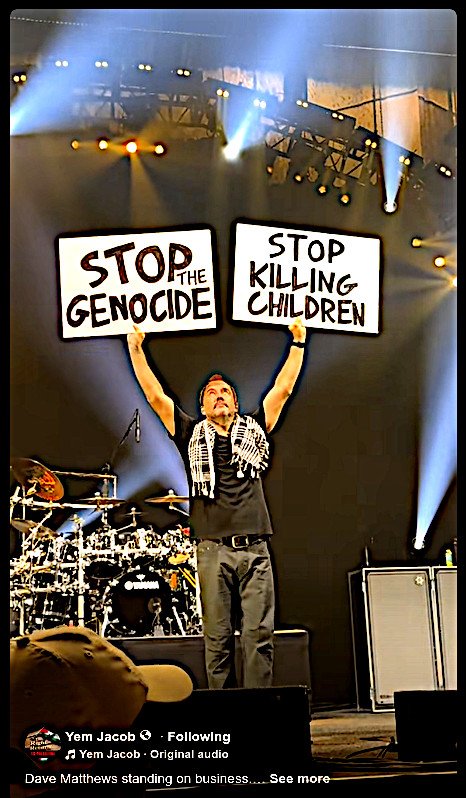
The phrase “Domination leads to Ritual Sacrifice” bridges the gap between historical sociology and ancient anthropology.
Throughout history, domination—the exertion of control, barbaric power, or authority over others—has frequently been inextricably linked to ritual human sacrifice.
This connection manifests in both structural power dynamics and ancient religious practices.
The transition from domination to human sacrifice is essentially the barbaric projection of unhealed guilt onto other human beings, often innocent children.
What’s #memoricide ?
It’s time to save our stories, our history, our truth.
#emmaswords #wordsmatter
via Brad Blinstrub ” Amen. What we are seeing is the march of the Khazars. A disaster renamed Israel.
via EnterTheUnseen ” If you truly understand the bridge between Spirit & psyche, you’d NEVER condone forcing religious beliefs on others &/or disempowering people’s spiritual decision making. It’s abusive behavior that breeds religious trauma, which creates fear-based neural associations to divinity.
1 of 3



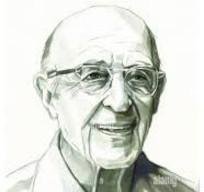 Carl Rogers
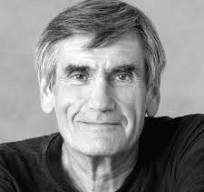 Marshall Rosenberg
 Richard Schwartz

