
 Carl Rogers
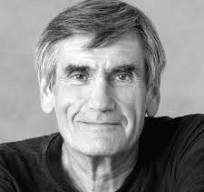 Marshall Rosenberg
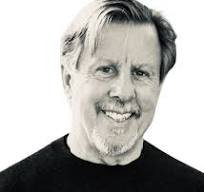 Richard Schwartz
Hegemony:
Refers to the dominance of specific cultural, political, or corporate narratives that shape “common-sense” worldviews, often favoring consumerism or downplaying the urgency of climate action.
The Social Media Divide:
Reflects the deep ideological polarization, filter bubbles, and algorithmic biases that separate environmental advocates from climate-skeptic communities.
When evaluated over the past three decades, the carbon footprint of all global military usage is significantly larger (5 X) than the combined carbon footprint of global data centers and internet servers.
The global military carbon footprint of approximately 2,750 MtCO₂e accounts for about 5.5% of total global greenhouse gas emissions. If the world’s military apparatus were a single nation, it would rank as the fourth-largest carbon emitter on Earth, surpassing the total territorial emissions of Russia. [1, 2]
Key Aspects of Military Emissions
- The Scale of Impact: This 2,750 MtCO₂e figure includes direct operational emissions (like fuel for aircraft and ships), indirect supply chain impacts, and emissions from military bases. It often excludes the massive additional carbon costs of armed conflicts and reconstruction. [1, 2, 3, 4]
- Voluntary Loopholes: Following lobbying by the United States during the 1997 Kyoto Protocol, military bunker fuels and overseas operations were exempted from mandatory international reporting. While the 2015 Paris Agreement theoretically addressed this, the current UNFCCC framework relies purely on voluntary reporting, allowing a massive “military emissions gap” to persist. [1, 2]
- The Spending Link: Research highlights a clear correlation between military expenditure and carbon output. Scientists for Global Responsibility (SGR) projects that every additional USD 100 billion in global military spending increases the carbon footprint by roughly 32 million tonnes of CO₂e.
The Century-Long Military Blind Spot
The energy used in a century of armed conflicts remains an accounting “blind spot” for two primary reasons: [1, 2]
- The Kyoto Loophole: In 1997, intense lobbying during the Kyoto Protocol exempted military emissions from mandatory reporting to the UN. The 2015 Paris Agreement left military reporting strictly voluntary, leaving an enormous data gap. [1, 2]
- The Military-Industrial Complex: Active warfare represents only a portion of the energy footprint. A massive amount of energy is constantly consumed by everyday operations, maintaining hundreds of global supply chains, and manufacturing weapons systems. For context, the US Department of Defense remains the largest institutional consumer of fossil fuels on Earth.
Social systems are highly vulnerable to psychological dynamics.
Psychological Projections and “In-Groups”
The phenomenon of a group projecting its own history or guilt onto an “out-group” is a well-documented concept in social psychology known as scapegoating.
* When a society or group faces a deeply uncomfortable truth about its history, it often experiences intense cognitive dissonance.
* To alleviate this psychological discomfort, individuals or groups may seek out a historically marginalized target—an “out-group”—to carry the unconscious heavy burden of blame.
See DARVO
* This deflects accountability and allows the dominant “IN-group” to maintain a positive self-image (false ego pride).
See DARVO
The Crucifixion as a Archetypal Narrative: See DARVO
The narrative of Jesus aligns with what historians and sociologists call an archetypal human behavior pattern.
* Across different eras, human crowds frequently display a mob mentality when confronted with truth, discomfort, or societal stress.
* Rather than engaging in collective self-reflection, historical groups have repeatedly unified themselves by targeting, condemning, and punishing a single entity or minority group.
(See: scapegoating and DARVO )
* This DARVO pattern of fear based human behavior has remained remarkably consistent across thousands of years of human history.
Major fact-checking and societal hurdles: [1]
* The Trust Deficit: Research shows that individuals who are deeply entrenched in conspiracy theories or extremist echo chambers rarely change their minds when presented with an automated “false” label. Instead, they often claim the fact-checker itself is part of a biased cover-up.
* Historically, human cultures have used scapegoating during times of economic or social crisis.
[1] [ https://today.duke.edu/2021/03/don%E2%80%99t-online-outrage-look-inward )
Cognitive biases are systematic, and subconscious...
Cognitive biases are systematic, and subconscious...
Cognitive biases are systematic, subconscious errors in thinking and decision-making caused by mental shortcuts (heuristics) or personal preferences. Recognizing these twelve common biases can significantly improve your reasoning, investments, and daily judgment.
The 12 Common Cognitive Biases
Confirmation Bias: The tendency to search for, interpret, and favor information that confirms your preexisting beliefs while ignoring contradictory evidence.
Anchoring Bias: The reliance too heavily on the first piece of information encountered (the “anchor”) when making decisions, even if it is irrelevant.
Availability Heuristic: Estimating the likelihood of events based on how easily examples come to mind, leading to an overestimation of dramatic or recent events.
Dunning-Kruger Effect: A phenomenon where people with limited knowledge or competence in a domain greatly overestimate their own expertise or intelligence.
Sunk Cost Fallacy: The continuation of a flawed endeavor because of unrecoverable resources (time, money, or effort) already invested.
Halo Effect: The tendency to let your overall impression of a person or brand influence how you feel about their specific character or traits (e.g., assuming an attractive person is also highly intelligent).
Bandwagon Effect: The adoption of certain beliefs or behaviors primarily because many other people are doing so; also known as groupthink.
Hindsight Bias: The inclination to see past events as having been entirely predictable, often summarized as the “I knew it all along” phenomenon.
Self-Serving Bias: The habit of claiming credit for personal successes while attributing failures or mistakes to external circumstances or bad luck.
Survivorship Bias: The logical error of focusing only on successful outcomes and ignoring failures, leading to a distorted perception of reality (e.g., studying only successful startups to learn how to run a business).
Ostrich Effect: The subconscious decision to ignore dangerous, negative, or painful information, equivalent to “burying your head in the sand”.
Blind Spot Bias: The tendency to see oneself as less biased and more objective than other people

