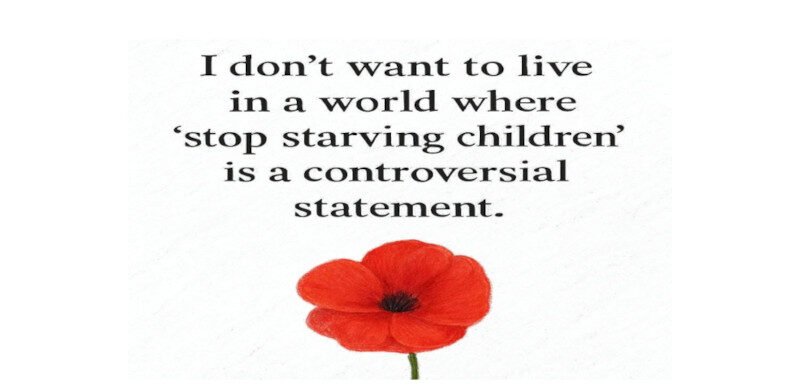
stop_starving_kids

Understanding this could greatly reduce human suffering.

https://empathymatters.org/now/ifs-spirit/


Some people interpret the story of Jesus Christ as a spiritual metaphor for the inner psychological journey toward wholeness, which aligns with key concepts of Richard Schwartz’s Internal Family Systems (IFS) model. In this metaphorical view, Jesus can be seen as the Self, while his disciples and other figures represent the psyche’s various parts.


The IFS framework


Developed by Richard Schwartz, IFS posits that the mind is made up of multiple “parts” (sub-personalities). A core concept is the compassionate, wise, and undamaged “Self” that exists at the core of every individual. The goal of IFS therapy is to help a person become “Self-led,” so the Self can heal the individual’s wounded and protective parts.


Parallels between the Jesus story and IFS

 
    • Jesus as the Self: In the IFS framework, the Self is a compassionate, wise, and healing presence. Some interpretations view Jesus in a similar way:
      • He is the center of the system. Like the IFS Self, Jesus is the leader and compassionate core around which the other figures (parts) revolve.
      • He is a source of healing. Jesus’s miracles can be seen as a metaphor for the Self’s ability to heal and unburden the traumatized parts of the psyche.
      • He exemplifies wholeness. The death of Jesus and his resurrection can be interpreted as the death of the ego (the false self) and the subsequent resurrection of the true, whole Self.
    • The Disciples as Protective Parts: The twelve disciples can be seen as an inner “family” of parts, each with its own role, strengths, and fears.
      • Peter as the Manager: Peter is often impulsive, outspoken, and attempts to protect Jesus, even to the point of denial and resistance. This mirrors a “manager” part in IFS, which uses controlling behavior to preemptively prevent pain and maintain a sense of order.
      • Judas as the Exile: Judas’s betrayal and subsequent despair can be viewed as a deeply wounded and exiled part that feels unlovable and acts out its pain.
      • The other disciples: The varying strengths, jealousies, and weaknesses of the other disciples represent the full range of human experience contained within an internal system.
    • The Path of Healing and Integration: The larger narrative of Jesus’s life, death, and resurrection parallels the IFS process of healing and integration:
      • Calling the parts: Jesus calls his disciples to follow him, much like the Self in IFS “calls” the different parts to engage in the healing process.
      • Witnessing the wounded parts: Just as Jesus models radical compassion for all people, the Self in IFS must witness its wounded parts with gentleness, curiosity, and non-judgment.
      • Unburdening the pain: The suffering and sacrifice of the cross can be seen as a metaphorical unburdening of all the pain and sin (the burdens in IFS) that the internal parts are carrying.
      • Achieving Self-Leadership: The story’s ultimate goal is for the disciples to become like Jesus, just as the IFS goal is for the parts to learn to trust the Self to lead the system, leading to greater inner peace and wholeness.

        Potential Similarities and Connections:

        Compassion and Unconditional Positive Regard: Both Jesus and the Self, as understood in IFS, are often characterized by deep compassion and unconditional positive regard. Jesus’s teachings emphasized love and forgiveness, even for those who persecuted him. Similarly, the Self in IFS is believed to possess inherent wisdom, compassion, and acceptance for all parts of the system, even those that exhibit seemingly negative behaviors.
         
        Healing and Integration: Jesus’s ministry often involved healing the sick and offering solace to the suffering. In a similar vein, the Self in IFS aims to heal and integrate the wounded parts of the internal system. By connecting with the Self, individuals can offer compassion and understanding to their parts, allowing them to release burdens and find healthier roles.
         
        Inner Authority and Wisdom: Jesus spoke with authority and wisdom, often challenging societal norms and offering a new perspective. The Self in IFS is also considered to be a source of inner wisdom and guidance. When individuals are Self-led, they can access their innate capacity for clarity, creativity, and effective action.
         
        Sacrifice and Redemption: The concept of sacrifice is central to the Jesus Christ story, particularly his willingness to suffer for the sake of humanity. While IFS doesn’t necessarily emphasize sacrifice in the same way, it does involve a willingness to acknowledge and understand the pain of one’s parts, even if it’s uncomfortable. This act of witnessing and validating can be seen as a form of “redemption” for those parts, allowing them to release their burdens and find healing.
         

        Important Distinctions and Considerations:

        There are diverse theological interpretations of the Jesus Christ story. Some interpretations may align more closely with IFS principles than others.
         
        The Nature of the Self: In IFS, the Self is considered an inherent aspect of every individual,
         

        In summary:

        There are indeed potential similarities and connections between the Jesus Christ story and the Self in IFS, particularly in terms of compassion, healing, inner wisdom, and the potential for redemption. However, it’s essential to approach this comparison with nuance and awareness of the distinct frameworks within which they operate.


        Sources:


        Link 1)

        Link 2)

        Link 3)


        Understanding this could greatly reduce human suffering.

        https://empathymatters.org/now/ifs-spirit/


        https://empathymatters.org/now/how-evil-triumphs


Article by: Gord Alton MDiv RP CASC Supervisor-Educator


“In summary, (see link below)… I have attempted to help you see how the evidence-based framework of the Internal Family System brings new understandings to how Christians can understand the inner conflict found within our soul.   IFS helps us see our Divine nature differently.  Seen through the IFS lens, our Divine nature is not the Mind part of us that seeks to manage our fallen or sinful nature.  Rather, our Divine nature is the dynamic of the indwelling Christ that resides within us right from the day we are born.   Within IFS, the dynamic of the Self echoes of the Indwelling Christ dynamic and follows many of the ways we, as Christians, understand the Spirit of Christ interacting with our lives.   Much more can be said about this connection between IFS and Christianity.   What excites me as a Christian psychotherapist is that through IFS we now have a contemporary evidence-based psycho-spiritual model that can help us, as Christians, along with the Bible, Christian history, and various Christian theologies, to understand how prayer and spiritual healing and transformation actually happen through the dynamics of the Indwelling Christ.


Gord Alton MDiv RP CASC Supervisor-Educator  


Link 4)


Understanding this could greatly reduce human suffering.

https://empathymatters.org/now/ifs-spirit/


RESEARCH: Randomized Clinical Trial on IFS treatment for PTSD

This study is being conducted at a Harvard-affiliated Cambridge Health Alliance community mental health center, led by an IFS Level 2-trained addiction psychiatrist, Zev Schuman-Olivier, MD. Dr. Schuman-Olivier, is Director for the Center for Mindfulness and Compassion, Medical Director for Addictions at Cambridge Health Alliance, faculty member in Harvard Medical School Department of Psychiatry and Director of the Clinical Core for NCCIH’s only P01 center grant focused on mind-body mechanisms for chronic pain.

IFS Shown to Reduce PTSD Symptoms in a Sample of Patients with Complex Trauma

“IFS Therapy for the Treatment of PTSD and Complex Trauma” was the first study funded by the Foundation back in 2014. Led by Hilary Hodgdon, PhD, at the Trauma Center, Justice Research Institute in Brookline, MA, USA, the study—an uncontrolled, feasibility pilot—sought to assess the efficacy of IFS on patient outcomes. Multiple validated scales were administered, including the IFS adherence scale. Certified IFS therapists were involved in providing the treatment and received clinical supervision from Frank Anderson, MD, and Richard Schwartz, PhD.

The results showed that IFS therapy had significantly positive effects on adults with PTSD and histories of exposure to multiple forms of childhood trauma. Following the sessions, PTSD and depressive symptoms were significantly reduced, with an overall time effect observed. Notably, at the one-month follow-up assessment, 92% of participants no longer met criteria for PTSD.

In 2021 the research paper was published by the Journal of Aggression, Maltreatment and Trauma, a peer-reviewed journal for practitioners in this field. The full article is available here.

NREPP accepted and recognized IFS Therapy as an evidence-based modality

In the second half of 2014 and following an independent, rigorous review, the National Registry of Evidence-based Practices and Programs (NREPP), accepted for review a comprehensive application by the Foundation for Self Leadership, prepared on behalf of The Center for Self Leadership and the community. The application was a formal request to consider IFS Therapy as an evidence-based psychotherapeutic modality. The application had been submitted in early 2014 and was included in a new cohort of applicants subject to some new NREPP guidelines for review.

NREPP, which was an entity operating within the U.S. Substance Abuse and Mental Health Services Administration (SAMHSA), had engaged private researchers to review all submissions independently and conduct a two-tier rigorous evaluation, examining the quality of the research about IFS, which had to be based on a randomized clinical trial (RCT), and the capacity to disseminate the named modality.

The application revolved around a proof-of-concept RCT study, completed and published in a peer-review research journal, by Nancy Shadick, MD, MPH; Nancy Sowell, MSW, LICSW; and collaborators. The full article is available here.

In late 2015, the Foundation was notified that NREPP accepted and recognized IFS Therapy as an evidence-based modality. See story on the Foundation’s website and the announcement to the IFS community at the 2015 IFS Conference.

As a clinical treatment, it was independently confirmed that IFS Therapy leads to five outcomes, one effective and four promising. The outcomes covered areas of efficacy that appeared to deal with positive effects on body, mind, and spirit—among them: improving general functioning and well-being, reducing depression and depressive symptoms, and improving resilience and self-concept

Through the following link, the full posting of the SAMSHA-NREPP is presented verbatim as it had appeared on NREPP.SAMHSA.Gov.

Additional empirical evidence and resources

An accessible summary of significant completed research studies can be found at the IFS Institute website here.

The Foundation has created an annotated publication database which can be found under the Resources tab on our site or accessed here.

Key Findings from Peer-Reviewed IFS Research

Many comprehensive studies and reviews on IFS have been published in journals through Taylor & Francis Online. 

———————————-

Online Group-Based Internal Family Systems Treatment for PTSD: Feasibility and Acceptability of Program for Alleviating and Resolving Trauma and Stress (PARTS)

In July 2024, the Foundation for Self Leadership announced that the findings from a second Foundation-funded study were published in Psychological Trauma: Theory, Research, Practice, and Policy, the American Psychological Association’s leading trauma specialty journal. Below is an excerpt from the Foundation’s announcement: The article is co-authored by a team led by Zev Schuman-Olivier, MD and includes contributions from Alexandra Comeau, MA, Lia J. Smith, PhD, Lydia Smith, BS, Hanna Soumerai Rea, MA, Mary Catherine Ward, MA, Timothy B. Creedon, PhD, Martha Sweezy, PhD, and Lawrence G….

Internet Addiction and Efficacy of IFS

Design and validation of a therapy program based on the internal family systems model and its efficacy on internet addiction Different treatment approaches only target internet addiction symptoms and do not address its cause. The internal family systems model is a non-pathological and experiential approach to treating disorders that deals with the cause instead of the symptoms. Still, there is a research gap in designing and validating a treatment program based on this approach and investigating its efficacy on Internet Addiction. This study aimed to design and validate a therapy program based….

Internal Family Systems (IFS) Therapy for Posttraumatic Stress Disorder (PTSD) among Survivors of Multiple Childhood Trauma: A Pilot Effectiveness Study

In December 2021, The Foundation for Self Leadership, our sister organization, proudly announced that its first funded, independently administered IFS study was accepted for publication in the Journal of Aggression, Maltreatment & Trauma. Below is an excerpt from the Foundation’s announcement: The grant-funded research was led by Hilary Hodgdon, PhD, at the Trauma Center, Justice Research Institute, in Brookline, Massachusetts, USA. The study, which was an uncontrolled feasibility pilot, sought to assess the efficacy of IFS on patient outcomes. Among other findings, details of which are….

MDMA and PTSD STUDIES

Below is an excerpt from the 2019 edition of Internal Family Systems Therapy – 2nd Edition. Since 2008, Michael Mithoefer and his colleagues have been studying methylenedioxymethamphetamine (MDMA) (called ecstasy on the street) in conjunction with psychotherapy as a treatment for post-traumatic stress disorder (PTSD). More than 1100 individuals have received MDMA in phase 1 or phase 2 clinical trials so far without any unexpected drug-related serious adverse events (Lancet, 2016, p. 4). Because of the remarkable success of these first two studies, phase 3 trials are now underway with a multi….

The Efficacy Of Internal Family Systems Therapy In The Treatment Of Depression Among Female College Students: A Pilot Study

Authors: Shelley A. Haddock, Lindsey M. Weiler, Lisa J. Trump, Kimberly L. Henry In 2016, Shelley Haddock and colleagues published in the Journal of Marital and Family Therapy ( Haddock, et al, 2016) a study that tested IFS as an alternative treatment for depressed female college students, “a significant portion of whom do not benefit” from the existing empirically supported treatments, which the authors list as “antidepressant medication, cognitive-behavioral therapy (CBT), and interpersonal psychotherapy (IPT).” Subjects were randomly assigned to the IFS condition (n=17) and the treatment as….

IFS Shown to Reduce Pain and Depression, and Improve Physical Function for Rheumatoid Arthritis Patients

Results of Randomized Controlled Study Published in the Journal of Rheumatology August 15, 2013 – The results from a randomized controlled study, published recently in the Journal of Rheumatology, show that an IFS-based intervention had positive effects on patients with Rheumatoid Arthritis (RA), reducing pain and depressive symptoms, while improving physical function and self-compassion. The study was the first randomized control trial of its kind conducted to assess the efficacy of IFS on patient outcomes Dr. Nancy Shadick, from the Department of Medicine at Brigham and Women’s Hospital at….

IFS Scale

The IFS Scale is a personality scale based on the Internal Family Systems Model. It is the product of an extensive research project conducted by Ms. DeLand in collaboration with Richard Schwartz, and has proven to be an effective tool for the IFS practitioner. The scale is available via an online website to trained IFS clinicians for a fee of $9.99 per use. Here is the link to the website: http://www.ifs-scale.com If you have any questions please feel free to email Lia DeLand directly at liadeland5@gmail.com. Information Regarding the IFS Scale Overview: This is a 57-item scale ( a = .98; item….

IFS Glossary of Terms

Balance: A state in which members of a human system have equitable access to the responsibilities, resources, and influence they need. Blending: When the feelings and beliefs of one part merge with another part or with the Self Burdens: Extreme ideas or feelings that are carried by parts and govern their lives. Parts accrue burdens from exposure to an external person or event. Constraining Environment: A human system’s environment that is characterized by imbalance, polarization, enmeshment, and problematic leadership. Constraining environments impose burdens on the systems within them. Direct….

IFS Bibliography, APA Style

To submit new or missing works to this list – please email sara@ifs-institute.com BOOKS Anderson, F.G. (2021). Transcending trauma: Healing complect PTSD with internal family systems. Claire, WI: PESI Publishing. Anderson, F.G., Sweezy, M., & Schwartz, R.C. (2017). Internal family systems skills training manual: Trauma-informed treatment for anxiety, depression, PTSD & substance abuse. Eau Claire, WI: PESI Publishing. Barbera, M. (2008). B ring yourself to love: How couples can turn disconnection into intimacy. Boston, MA: Dos Monos Press. Breunlin, D.C., Schwartz, R.C., & MacKune-Karrer, B…..

https://ifs-institute.com/resources/research

——————

RESEARCH

Böckler, A. & Herrmann, L, Trautwein, F., Holmes, T. & Singer, T. (2017). Know thy selves: Learning to understand oneself increases the ability to understand others. Journal of Cognitive Enhancement, 1(2), 197-209, 2017. https://doi.org/10.1007/s41465-017-0023-6.

Engert, V., Kok, B., Papassotiriou, I., Chrousos, G. P., & Singer, T. (2017, November 20). Specific reduction in cortisol stress reactivity after social but not attention-based mental training. Science Advances. https://doi.org/10.1126/sciadv.1700495

Haddock, S. A., Weiler, L. M., Trump, L. J., & Henry, K. L. (2016). The Efficacy of Internal Family Systems Therapy in the Treatment of Depression Among Female College Students: A Pilot Study. Journal of Marital and Family Therapy, 43(1), 131-144. doi:10.1111/jmft.12184

Lumma, A., Böckler, A., Vrticka, P., & Singer, T. (2017). Who am I? Differential effects of three contemplative mental trainings on emotional word use in self-descriptions. Self and Identity, 16(5), 607-628. doi:10.1080/15298868.2017.1294107

Mithoefer, M. (Spring 2013). MDMA-assisted psychotherapy:
How different is it from other psychotherapy? MAPS Bulletin, Special Edition, Spring 2013. http://www.maps.org/news-letters/v23n1/v23n1_p10-14.pdf

Shadick, N. A., Sowell, N. F., Frits, M. L., Hoffman, S. M., Hartz, S. A., Booth, F. D., … Schwartz, R. C. (2013). A Randomized Controlled Trial of an Internal Family Systems-based Psychotherapeutic Intervention on Outcomes in Rheumatoid Arthritis: A Proof-of-Concept Study. The Journal of Rheumatology, 40(11), 1831-1841. doi:10.3899/jrheum.121465

DISSERTATIONS

                          Link to Zotero database – https://www.zotero.org/groups/4985243/empirical_studies_on_ifs__internal_family_systems__-_a_comprehensive_database

Amalu, C. (2023). An Analysis of Internal Family Systems Therapeutic Factors From the Perspective of the Catholic Christian Meta-Model of the Person (Publication No. 2919616218) [Doctoral dissertation, Divine Mercy University]. ProQuest Dissertations Publishing.

Carter, S. M. (1998). A Study of the Internal Family Systems Model Applied to Remarried Couples of Stepfamilies in Different Stages of Adjustment (Unpublished doctoral dissertation). Andrews University, Berrien Springs, Michigan.

Cooper, B. A. (1999). The Use of Internal Family Systems Therapy to Treat Issues of Biracial Identity Development. (Unpublished doctoral dissertation). International University, San Diego, California.

Davis, S. D. (2005). Common and Model-Specific Factors: What Marital Therapy Model Developers, Their Former Students, and Their Clients Say About Change (Unpublished doctoral dissertation). Virginia Polytechnic Institute, Blacksburg, Virginia.

Krug, J. A. (2012). Mediating Inner Conflict: A Qualitative Study on the Relationship-Building Process with One’s Subpersonalities (Unpublished doctoral dissertation). Institute of Transpersonal Psychology, Palo Alto, California.

Martin N. P. (2014). Understanding Aspects of the Self and Psychological Outcomes (Unpublished doctoral dissertation). Georgia Southern University, Statesboro, Georgia.

McVicker, S. A. M. (2017). Cherokee American Voices in Concept Analysis of Self-In-Relationship through Narrative; Theme; Metaphor; Internal Family Systems (IFS). (Doctoral dissertation published in open access). Fielding Graduate University, Santa Barbara, California.

Nehring, K. A. (1997). The Metaframeworks Approach to Treatment Of A Family In Therapy (Unpublished doctoral dissertation). Chicago School of Professional Psychology, Chicago, Illinois.

Reed, Daniel K (2019). Internal Family Systems Informed Supervision: A Grounded Theory Inquiry St. Mary’s University University, San Antonio, Texas.

Shelton, S. Z. (2012). The Greatest Love of All: Rewriting Mother/Daughter Mythic Imprints (Unpublished doctoral dissertation). Institute of Transpersonal Psychology, Palo Alto, California.

Schlief, M. L. (2014). Adaptation of the Internal Family Systems Model Among Analytically-Trained Therapists (Unpublished doctoral dissertation). Massachusetts School of Professional Psychology, Newton, MA. https://pqdtopen.proquest.com/doc/1625386617.html?FMT=ABS

Sokil, L. (1999). An Ethnography of Choice: Active Imagination in the Service of Self-Directed Change (Unpublished masters thesis). Concordia University, Canada.

https://empathymatters.org/now/ifs-spirit/?#IFS-RESEARCH


“Imagine living on a planet where the rich get richer by indoctrinating the people to follow ancient dogma, repeating an ancient doctrine of genocide projected onto innocent children, again and again, the rich get richer, and the children receive brutal indoctrination instead of Living Their Sacred Free & Joyful Life.


#IFS #Spirit #Self #Courage


Secret History: How Evil Triumphs: 


” Why Carl Jung believed that the church had lost the significance of Jesus.

account android arrow-alt-circle-down arrow-alt-circle-left arrow-alt-circle-right arrow-alt-circle-up arrow-down arrow-left arrow-right arrow-up author bars behance blogger bluesky buffer caret-down caret-left caret-right caret-square-down caret-square-left caret-square-right caret-square-up caret-up cart-menu-1 cart-menu-2 cart-menu-3 cart-menu-4 categories chevron-down chevron-left chevron-right chevron-up clock close comments cookies copyright coupon-discount date-modified date-published discord double-arrows-down double-arrows-left double-arrows-right double-arrows-up dribbble envelope-open envelope eye facebook fax flickr foursquare github gmail google-drive grid-view hashtag hollow-ring homepage instagram ios level-down-alt level-up-alt line link linkedin list-view login logout long-arrow-alt-down long-arrow-alt-left long-arrow-alt-right long-arrow-alt-up mastodonmedium messenger mobile-menu mobile phone pinterest place qq quote-left quote-right quotes reading-time-hourglass reading-time-stopwatch reddit rss scroll-to-top search shazam shopping-bag shopping-cart side-panel-opening-2-left side-panel-opening-2-right side-panel-opening-left side-panel-opening-right skype slack small-arrow-down small-arrow-left small-arrow-right small-arrow-up sms snapchat soundcloud spinner spotify stackoverflow sync telegram threadstiktok times-circle tinder trello tripadvisor tumblr twitch twitter viber vimeo vine vkontakte website wechat whatsapp windows wishlist xing yelp youtube zoom

Insula (island)

Insula is the Latin word for “island”

The insula is an underestimated brain area because it acts as a crucial hub, integrating bodily sensations (interoception) with emotions, cognition, and decision-making, linking our inner world to external reality. Often called the “fifth lobe,” it’s vital for self-awareness, feeling feelings (like hunger, pain, or disgust), emotional regulation, and learning moral/social rules, yet its deep location made it historically overlooked, though modern neuroscience now reveals its central role in mental health and addiction.

Key Functions of the Insula

Interoception:

Maps and interprets internal body states (heartbeat, gut feelings) and brings them to conscious awareness, forming subjective feelings.

Emotional Processing:

Generates emotional feelings, linking bodily states to emotions like disgust, fear, or empathy, and helps regulate them.

Decision-Making:

Influences choices by integrating feelings (somatic markers) with cognitive processes, helping us learn what’s rewarding or risky.

Cognitive Control:

Involved in attention, working memory, and initiating intentional actions, connecting feelings to motivation.

Social & Moral Learning:

Helps learn social norms, right/wrong, and evaluate social cues, impacting trust and interpersonal behavior.

Why It’s Underestimated & Re-Emerging

Hidden Location:

Deep within the brain, beneath the frontal and temporal lobes, making it harder to study.

Integration Hub:

Its extensive connections to sensory, emotional, and cognitive areas make it hard to study in isolation but essential for linking systems.

Clinical Relevance:

Underactivity is linked to issues like addiction (craving recall), anxiety, and impaired empathy, while its role in homeostasis is crucial for overall health.

In essence, the insula is the brain’s “feeling center,” translating our body’s signals into conscious experience, guiding our decisions, and shaping our understanding of ourselves and the world, making its underestimation a significant oversight in understanding human experience and disorders.

The Insula:

An Underestimated Brain Area

https://www.sciencedirect.com/science/article/abs/pii/S0166223617300176#:~:text=We%20pay%20attention%20to%20and,mediate%20human%20behaviors%20%5B22%5D.

https://www.researchgate.net/figure/Brain-regions-involved-in-central-processing-of-interoceptive-signals-The-diagrams-in_fig2_348117035

https://jennifersweeton.com/what-is-the-insula-the-important-mental-health-brain-structure-youve-never-heard-of/


Carl Rogers on Active Listening

For Rogers, empathy is sensing the client’s inner world “as if” it were one’s own, including the felt meanings and emotions, while still knowing it is the other person’s experience, not one’s own. It involves carefully communicating this understanding and checking back so that the client recognizes their own experience in what is reflected, which helps them feel deeply understood and facilitates change.​ (via acceptance)

Carl Rogers on active listening

Within Carl Rogers’ person-centered framework, a therapist’s own unarticulated inner experience, or internal incongruence, would be the potential source of PROJECTING feelings or biases ONTO the client.

Rogers emphasized the therapist’s core condition of congruence (or genuineness) as essential for therapeutic personality change.

Congruence means the therapist’s inner and outer experiences are aligned. The therapist is aware of their internal feelings and, if appropriate and helpful to the client, is transparent about them within the relationship.

Incongruence for a therapist would be having internal feelings (e.g., judgment, frustration, personal reactions) but hiding them behind a “professional façade”.

When a therapist is incongruent and not fully aware of or processing their own internal, unarticulated feelings, those feelings could implicitly or unconsciously influence their interactions, leading to a form of projection or an inability to offer genuine empathy and unconditional positive regard. This might manifest as subtly guiding the client, making interpretations, or signaling judgment, which would raise the client’s defenses and hinder their self-exploration.

Therefore, self-awareness and, when therapeutically relevant, the appropriate articulation of the therapist’s experience (transparency) are key in the Rogerian approach to avoid imposing the therapist’s own internal world onto the client.

====

Carl Rogers did NOT advocate guessing or imposing a feeling label from a pre-set “LIST” if the speaker had NOT conveyed that feeling, either in words, tone, or clear implication. Instead, he emphasized tentatively reflecting the feeling that seems present in the speaker’s actual message, and then checking its accuracy with the speaker.​

Rogers on active listening

Rogers described the listener’s task as grasping both the facts and the feelings in what is heard, not inventing or supplying feelings the speaker has not expressed. He contrasted this with more interpretive approaches that project meanings and dynamics onto the speaker, which he warned can increase defensiveness and inhibit real expression.​

Feelings reflection, NOT guessing

In Rogers-style reflective listening, the listener attends to the “total meaning” of the message, including tone, posture, and other nonverbal cues, and then responds especially to the feeling component that is actually manifest in the communication. When the listener reflects a feeling, it is meant as a careful, non-evaluative hypothesis about what the speaker is already expressing, not a speculative guess pulled from an abstract list of emotions the speaker has never indicated.​

https://www.perplexity.ai/search/in-active-listening-what-did-c-D42hS8shTk29OFWloNGtzA

https://lifebuilderscounseling.org/wp-content/uploads/activelistening.pdf

https://r.jordan.im/download/psychology/arnold2014.pdf

Active listening does not necessarily mean long sessions spent listening to grievances, personal or otherwise. It is simply a way of approaching those problems which arise out of the usual day-to-day events of any job.

https://wholebeinginstitute.com/wp-content/uploads/Rogers_Farson_Active-Listening.pdf

How does Rogers distinguish empathy from interpretation of feelings

https://www.perplexity.ai/search/how-does-rogers-distinguish-em-K4NQMqWGR3K8H3YI8hsSGA

Rogers treats empathy as an accurate, moment‑to‑moment entering of the other person’s experiential world, and he contrasts this with interpretation, which adds meanings or motives that go beyond what the person is actually expressing. Empathy stays close to the client’s “internal frame of reference,” while interpretation moves toward the helper’s theory, assumptions, or inferences about what the client really feels or means.​

What Rogers means by empathy

For Rogers, empathy is sensing the client’s inner world “as if” it were one’s own, including the felt meanings and emotions, while still knowing it is the other person’s experience, not one’s own. It involves carefully communicating this understanding and checking back so that the client recognizes their own experience in what is reflected, which helps them feel deeply understood and facilitates change.​

How interpretation differs

Interpretation, in contrast, involves the listener offering an explanation, hidden meaning, or deeper feeling that the client has not clearly expressed, often drawing on diagnostic or theoretical ideas. Rogers warned that this kind of interpretive stance can make the client feel analyzed or judged, increase defensiveness, and shift the focus away from the client’s lived experiencing toward the therapist’s concepts.​

Key elements of the distinction

Empathy tracks the client’s explicit and implicit meanings and feelings as they emerge, staying within what the client is actually communicating.​

Interpretation goes beyond that communication, proposing “what is really going on” psychologically, even if the client has not signaled it.​

Rogers framed effective helping as privileging empathic understanding and accurate reflection over interpretive moves, especially early in the relationship.​

Fundamental Attribution Error

The fundamental attribution error is the psychological tendency to overestimate the role of personality and underestimate the role of situational factors when explaining another person’s behavior.

For example, one might assume a coworker who is late is lazy, without considering that they might have faced a significant traffic jam or a family emergency.

How it works

Internal vs. external factors: We tend to attribute others’ actions to their internal characteristics (like their personality or beliefs), while overlooking external, situational pressures (like a bad day or a stressful environment).

Self vs. others:

We often make this error when observing others, but we are less likely to do it to ourselves because we are more aware of the external circumstances influencing our own actions.

Impact on judgment:

This bias can lead to unfair judgments, strained relationships, and misunderstandings because we are not considering the full picture of what is influencing behavior.

Example

Observing a driver: You see a driver swerve and assume they are a “jerk” or a “bad driver”.

Considering situational factors:

However, the fundamental attribution error occurs if you don’t also consider that the driver might be rushing to a hospital or dealing with a sudden medical emergency.

** Workplace scenario:**

A manager might believe an employee’s missed deadline is due to incompetence, without considering the possibility of insufficient resources or unclear instructions from the company.

Assata_Shakur


..::”Nobody in the world, nobody in history, has ever gotten their freedom by appealing to the moral sense of people who are oppressing them.

Assata Shakur

 
Credit: Dr Megan Marie
Limbic System
Credit: Dr Megan Marie
https://www.drmeganmarie.com/blog/limbic-system

teststop_starving_kids

Zoom-Link-info