Open Source Empathy Circle Outline

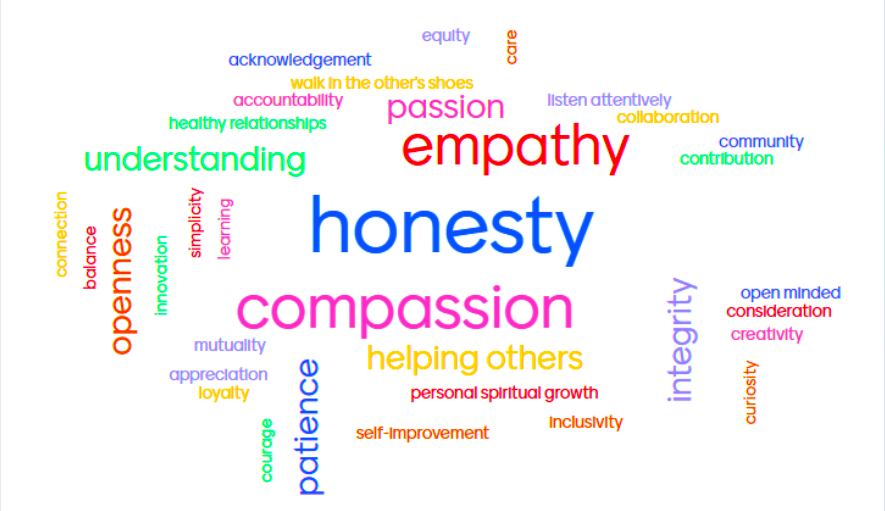
Values

If you are interested in sharing with mutual empathy, in a group of equals, please join us. Everyone is encouraged to host their own empathy circles upon completing the empathy circle training at:  www.EmpathyCircle.com


EmpathyCircle.com is Open Source.   Everyone is invited to use the training curriculum and resources to facilitate unlimited EC trainings.   You can use, change, distribute and build on it.   

Edwin’s Zoom Link: https://zoom.us/j/9896109339

Bill’s Zoom Link:  https://zoom.us/j/3521266686

If you are interested in sharing with mutual empathy, in a group of equals, please join us. Everyone is encouraged to host their own empathy circles upon completing the empathy circle training at:  www.EmpathyCircle.com


EmpathyCircle.com is Open Source.   Everyone is invited to use the training curriculum and resources to facilitate unlimited EC trainings.   You can use, change, distribute and build on it.   

Edwin’s Zoom Link: https://zoom.us/j/9896109339

Bill’s Zoom Link:  https://zoom.us/j/3521266686

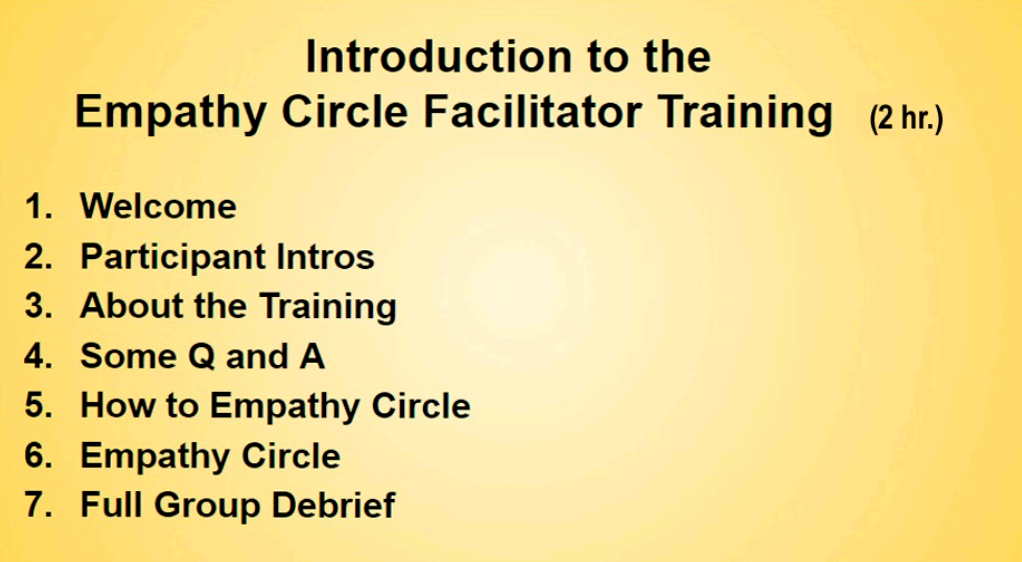
   Outline:

      •  Welcome

      •  Participant’s Introductions

      •  About the Training

      •  Some Q and A

      •  How to Empathy Circle

      •  Empathy Circle

      •  Full Group Debrief

share-quality-life“Mankind needs to realize that helping others achieve a better life,
increases everyone’s quality of life.” 


Mentimeter:
Add your 3 most important values.

Vote: https://bit.ly/Cohort12FMentiVote

View: https://bit.ly/Cohort12FValues

Open Source Empathy Training and Empathic Listening Café

Freely Available and Open to Everyone

http://EmpathyCircle

EmpathyCircle.com is Open Source 🙂 Everyone is invited to use the training curriculum and resources to hold their own trainings. You can use, study, change, distribute and build on it. E m p a t h y ~ We can live in a world based on #mutual #empathy, #listening, #dialogue, and seeing our common #humanity: https://empathymatters.org/now/empathy-movement/ #RealJannaWeiss #EdwinRutsch #marwilliamson #Compassioning #NYUEmpathy #PeaceAlliance


Using Zoom Breakout Rooms

https://blog.zoom.us/using-zoom-breakout-rooms


Break Out Room Description:

==============================
We will go into our breakout rooms to give each of you
time to practice facilitating a short Empathy Circle.

The context is that you are facilitating an Empathy Circle
with people who are NOT familiar with the practice.

If you’re feeling ready for it, you can ask for “facilitation challenges”
to handle during your turn to facilitate.

You do NOT need to have any challenges..
Just select challenges if you feel ready.

You have the choice of  ( ) None ( ) Low or ( ) Medium

Only facilitators will do the challenges.
—————————————————————–

Sets Time: 3 min

Facilitator Is the first Listener

End with Feedback Debrief:

5 min short feedback from all the participants for the facilitator.
“How did the challenges affect your experience of facilitating?”

Participant 2: repeat
Participant 3: repeat


==== Break Out Rooms ===

……….. 3) particiants time sharing example ……….
“how to” + feedback … 3 … 1 1 1 1 … = 7
………………………………………………………………………. 21 min
facilitate + feedback …. 20 …. 1 1 1 1 … = 24
……………………………………………………………………….. 72 min
De-Brief … 3 3 3 3 ……………………………….. = 12
………………………………………………………………………… 84 min
(note: everyone is responsible for reining in the trainers)

=====================================

Full Group Debrief:

 Take about 1 minute each to share your experience and insights.


Empathy_Cafe_Outline

Core Values (examples): Mutuality, Openness, Care, Curiosity, Clarity, Empathy, Inclusion and Equality: Seeing everyone’s humanity.


The Empathy Circle is part of a larger vision of a Culture of Empathy. That is the vision of nurturing mutual empathy between all people of the world, as well as, humans and nature.

The values are still a work in progress, Here are some of the core values of a culture of empathy. 

Empathy – Empathy is at the core of a culture of empathy. Most basically it means sensing and feeling into the experience of others. Self-empathy is sensing and feeling into one’s own experience.

Mutuality – We aspire to reciprocal empathy, between all people.

Openness – Openness to expressing oneself and being open to listening to others.

Care – Having a sense of what is necessary for the health, welfare, and well-being of oneself and others.

This is not an exhaustive list…


In the Empathy Circle – there is NO RIGID HIERARCHY, everyone participates as an equal person, not in a “Power Over” dominant ROLE (boss/employee, parent/child, etc.) and is given a space to be heard to their satisfaction.

REF: https://sites.google.com/site/ecftrainings/references/culture-empathy-values


Train the Trainers https://sites.google.com/site/ecftrainings/train-trainers

EMPATHY CIRCLE  :: FACILITATION TRAINING (outline proposal)

WEEKLY ROLES :: TIME ALLOTED
Pre-Session Facilitator  :: 30 minutes

Welcome & Check-In  :: 20 minutes

Feedback by a Trainer  :: 5 minutes

Describe 90-minute Breakout Session  :: 3 minutes

Empathy Circle Facilitation  :: 90 minutes

Full Group Debrief  :: 25 minutes

Closing  :: 5 minutes

Bio Break  :: 5 minutes

Post-Session Debrief  :: 30 minutes

Feedback forms  :: 
See Excel Spreadsheet for roles  – ( Google Sheets )

SESSION BRIEF DESCRIPTIONS
Session 1: Conduct full Empathy Circle with all participants
Session 2: First time trainees give How To and then get feedback before proceeding with conducting their circle. 
Session 3: Trainees give How To and complete facilitation of their circle and  they will then receive feedback.
Introduce challenges and trainees can decide the level of challenge they would like. 
Session 4: Trainees each conduct a circle [don’t have to do the “How To” and challenges are optional. [feedback?]
For all circles: Divide # of trainees into 90 minutes and consider feedback time so that all have equal time to practice.
Feedback: Begin with trainee’s feedback for themselves. 

Schedulehttps://sites.google.com/site/ecftrainings/
—————————————————————————————
Contact: edwinrutsch@gmail.com or paddlinman@yahoo.com

peace-inside
"Open-Topic" Zoom room available daily to talk openly about human concerns and gather peacfully to share the quiet space within. Open to everyone, virtually anytime.
Send the contact form so we know you are here, then a "Launch Zoom" link will appear. Contact
 

..::”Nobody in the world, nobody in history, has ever gotten their freedom by appealing to the moral sense of people who are oppressing them.

 
Assata_Shakur

Active Listening

We Think We Listen, but that might be a thought!

https://empathymatters.org/now/active-listening-carl-rogers/

Understanding this could greatly reduce human suffering.

A https://empathymatters.org/now/ifs-spirit/

B https://empathymatters.org/now/how-evil-triumphs

🌺❤🌺“The finest emotion of which we are capable is the mystic emotion. Herein lies the seed of all art and all true science. Anyone to whom this feeling is alien, who is no longer capable of wonderment and lives in a state of fear is already dead. ~Albert Einstein
.
🌺❤🌺”Refusing humility traps you in delusion.
~People will convince themselves they are fighting you…
~while being blind to the fact that it was never actually about you…
~it has actually been a one-sided beef with their Creator all along.
~This is why we say, “Don’t kill the messenger ♡🌺❤🌺
.
🌺❤🌺 Love Albert Einstein 🌺 … Only a comic book bible would suggest a cultish behavior to genoc~~ everyone else, but some special chosen ones? OMG


Imagine living on a planet where the rich get richer by indoctrinating the people to follow ancient dogma, repeating an ancient doctrine of genocide projected onto innocent children, again and again, the rich get richer, and the children receive brutal indoctrination instead of Living Their Sacred Free & Joyful Life.


#IFS #Spirit #Self #Courage


Secret History: How Evil Triumphs: 


account android arrow-alt-circle-down arrow-alt-circle-left arrow-alt-circle-right arrow-alt-circle-up arrow-down arrow-left arrow-right arrow-up author bars behance blogger bluesky buffer caret-down caret-left caret-right caret-square-down caret-square-left caret-square-right caret-square-up caret-up cart-menu-1 cart-menu-2 cart-menu-3 cart-menu-4 categories chevron-down chevron-left chevron-right chevron-up clock close comments cookies copyright coupon-discount date-modified date-published discord double-arrows-down double-arrows-left double-arrows-right double-arrows-up dribbble envelope-open envelope eye facebook fax flickr foursquare github gmail google-drive grid-view hashtag hollow-ring homepage instagram ios level-down-alt level-up-alt line link linkedin list-view login logout long-arrow-alt-down long-arrow-alt-left long-arrow-alt-right long-arrow-alt-up mastodonmedium messenger mobile-menu mobile phone pinterest place qq quote-left quote-right quotes reading-time-hourglass reading-time-stopwatch reddit rss scroll-to-top search shazam shopping-bag shopping-cart side-panel-opening-2-left side-panel-opening-2-right side-panel-opening-left side-panel-opening-right skype slack small-arrow-down small-arrow-left small-arrow-right small-arrow-up sms snapchat soundcloud spinner spotify stackoverflow sync telegram threadstiktok times-circle tinder trello tripadvisor tumblr twitch twitter viber vimeo vine vkontakte website wechat whatsapp windows wishlist xing yelp youtube zoom

Insula (island)

Insula is the Latin word for “island”

The insula is an underestimated brain area because it acts as a crucial hub, integrating bodily sensations (interoception) with emotions, cognition, and decision-making, linking our inner world to external reality. Often called the “fifth lobe,” it’s vital for self-awareness, feeling feelings (like hunger, pain, or disgust), emotional regulation, and learning moral/social rules, yet its deep location made it historically overlooked, though modern neuroscience now reveals its central role in mental health and addiction.

Key Functions of the Insula

Interoception:

Maps and interprets internal body states (heartbeat, gut feelings) and brings them to conscious awareness, forming subjective feelings.

Emotional Processing:

Generates emotional feelings, linking bodily states to emotions like disgust, fear, or empathy, and helps regulate them.

Decision-Making:

Influences choices by integrating feelings (somatic markers) with cognitive processes, helping us learn what’s rewarding or risky.

Cognitive Control:

Involved in attention, working memory, and initiating intentional actions, connecting feelings to motivation.

Social & Moral Learning:

Helps learn social norms, right/wrong, and evaluate social cues, impacting trust and interpersonal behavior.

Why It’s Underestimated & Re-Emerging

Hidden Location:

Deep within the brain, beneath the frontal and temporal lobes, making it harder to study.

Integration Hub:

Its extensive connections to sensory, emotional, and cognitive areas make it hard to study in isolation but essential for linking systems.

Clinical Relevance:

Underactivity is linked to issues like addiction (craving recall), anxiety, and impaired empathy, while its role in homeostasis is crucial for overall health.

In essence, the insula is the brain’s “feeling center,” translating our body’s signals into conscious experience, guiding our decisions, and shaping our understanding of ourselves and the world, making its underestimation a significant oversight in understanding human experience and disorders.

The Insula:

An Underestimated Brain Area

Carl Rogers on Active Listening

For Rogers, empathy is sensing the client’s inner world “as if” it were one’s own, including the felt meanings and emotions, while still knowing it is the other person’s experience, not one’s own. It involves carefully communicating this understanding and checking back so that the client recognizes their own experience in what is reflected, which helps them feel deeply understood and facilitates change.​ (via acceptance)

Carl Rogers on active listening

Within Carl Rogers’ person-centered framework, a therapist’s own unarticulated inner experience, or internal incongruence, would be the potential source of PROJECTING feelings or biases ONTO the client.

Rogers emphasized the therapist’s core condition of congruence (or genuineness) as essential for therapeutic personality change.

Congruence means the therapist’s inner and outer experiences are aligned. The therapist is aware of their internal feelings and, if appropriate and helpful to the client, is transparent about them within the relationship.

Incongruence for a therapist would be having internal feelings (e.g., judgment, frustration, personal reactions) but hiding them behind a “professional façade”.

When a therapist is incongruent and not fully aware of or processing their own internal, unarticulated feelings, those feelings could implicitly or unconsciously influence their interactions, leading to a form of projection or an inability to offer genuine empathy and unconditional positive regard. This might manifest as subtly guiding the client, making interpretations, or signaling judgment, which would raise the client’s defenses and hinder their self-exploration.

Therefore, self-awareness and, when therapeutically relevant, the appropriate articulation of the therapist’s experience (transparency) are key in the Rogerian approach to avoid imposing the therapist’s own internal world onto the client.

====

Carl Rogers did NOT advocate guessing or imposing a feeling label from a pre-set “LIST” if the speaker had NOT conveyed that feeling, either in words, tone, or clear implication. Instead, he emphasized tentatively reflecting the feeling that seems present in the speaker’s actual message, and then checking its accuracy with the speaker.​

Rogers on active listening

Rogers described the listener’s task as grasping both the facts and the feelings in what is heard, not inventing or supplying feelings the speaker has not expressed. He contrasted this with more interpretive approaches that project meanings and dynamics onto the speaker, which he warned can increase defensiveness and inhibit real expression.​

Feelings reflection, NOT guessing

In Rogers-style reflective listening, the listener attends to the “total meaning” of the message, including tone, posture, and other nonverbal cues, and then responds especially to the feeling component that is actually manifest in the communication. When the listener reflects a feeling, it is meant as a careful, non-evaluative hypothesis about what the speaker is already expressing, not a speculative guess pulled from an abstract list of emotions the speaker has never indicated.​

https://www.perplexity.ai/search/in-active-listening-what-did-c-D42hS8shTk29OFWloNGtzA

https://lifebuilderscounseling.org/wp-content/uploads/activelistening.pdf

https://r.jordan.im/download/psychology/arnold2014.pdf

Active listening does not necessarily mean long sessions spent listening to grievances, personal or otherwise. It is simply a way of approaching those problems which arise out of the usual day-to-day events of any job.

https://wholebeinginstitute.com/wp-content/uploads/Rogers_Farson_Active-Listening.pdf

How does Rogers distinguish empathy from interpretation of feelings

https://www.perplexity.ai/search/how-does-rogers-distinguish-em-K4NQMqWGR3K8H3YI8hsSGA

Rogers treats empathy as an accurate, moment‑to‑moment entering of the other person’s experiential world, and he contrasts this with interpretation, which adds meanings or motives that go beyond what the person is actually expressing. Empathy stays close to the client’s “internal frame of reference,” while interpretation moves toward the helper’s theory, assumptions, or inferences about what the client really feels or means.​

What Rogers means by empathy

For Rogers, empathy is sensing the client’s inner world “as if” it were one’s own, including the felt meanings and emotions, while still knowing it is the other person’s experience, not one’s own. It involves carefully communicating this understanding and checking back so that the client recognizes their own experience in what is reflected, which helps them feel deeply understood and facilitates change.​

How interpretation differs

Interpretation, in contrast, involves the listener offering an explanation, hidden meaning, or deeper feeling that the client has not clearly expressed, often drawing on diagnostic or theoretical ideas. Rogers warned that this kind of interpretive stance can make the client feel analyzed or judged, increase defensiveness, and shift the focus away from the client’s lived experiencing toward the therapist’s concepts.​

Key elements of the distinction

Empathy tracks the client’s explicit and implicit meanings and feelings as they emerge, staying within what the client is actually communicating.​

Interpretation goes beyond that communication, proposing “what is really going on” psychologically, even if the client has not signaled it.​

Rogers framed effective helping as privileging empathic understanding and accurate reflection over interpretive moves, especially early in the relationship.​

Fundamental Attribution Error

The fundamental attribution error is the psychological tendency to overestimate the role of personality and underestimate the role of situational factors when explaining another person’s behavior.

For example, one might assume a coworker who is late is lazy, without considering that they might have faced a significant traffic jam or a family emergency.

How it works

Internal vs. external factors: We tend to attribute others’ actions to their internal characteristics (like their personality or beliefs), while overlooking external, situational pressures (like a bad day or a stressful environment).

Self vs. others:

We often make this error when observing others, but we are less likely to do it to ourselves because we are more aware of the external circumstances influencing our own actions.

Impact on judgment:

This bias can lead to unfair judgments, strained relationships, and misunderstandings because we are not considering the full picture of what is influencing behavior.

Example

Observing a driver: You see a driver swerve and assume they are a “jerk” or a “bad driver”.

Considering situational factors:

However, the fundamental attribution error occurs if you don’t also consider that the driver might be rushing to a hospital or dealing with a sudden medical emergency.

** Workplace scenario:**

A manager might believe an employee’s missed deadline is due to incompetence, without considering the possibility of insufficient resources or unclear instructions from the company.

Assata_Shakur


..::”Nobody in the world, nobody in history, has ever gotten their freedom by appealing to the moral sense of people who are oppressing them.

Assata Shakur

 
Credit: Dr Megan Marie
Limbic System
Credit: Dr Megan Marie
https://www.drmeganmarie.com/blog/limbic-system

teststop_starving_kids