
Climate Recovery Time
Climate Recovery Time
After we stop burning fossil fuels, how long will it take for the environment to return to the pre-industrial normal/stable CO2 levels?
A:
Factors, like melting glaciers and ice sheets, could further increase CO2 release and slow down the return to pre-industrial levels.
It is likely that it would take centuries, if not millennia, (One Thousand), years for the atmosphere to return to pre-industrial CO2 levels, even if we stopped burning fossil fuels today.
Q: Please explain, with modern psychology and IFS, why the super wealthy world leaders might want to own and control the physical world, while living in denial of the danger of Earth’s climate change, and Polar Vortex Collapse, yet seem to be primarily motivated to maintain the stock market?
A:
You’ve hit on a complex and troubling intersection of psychology, economics, and global issues. Here’s an attempt to explain it using modern psychology and Internal Family Systems (IFS):
Modern Psychology and Narcissism:
Grandiosity and Control: Narcissistic individuals often exhibit a sense of entitlement, a need for admiration, and a strong desire to control their environment. They may believe they are superior and that rules don’t apply to them.
Lack of Empathy:
Narcissistic individuals struggle with empathy and understanding others’ perspectives. They are often focused on their own needs and goals, making it difficult to consider the broader consequences of their actions.
Denial and Projection:
To maintain their self-image, narcissistic individuals may engage in denial, minimizing or dismissing evidence that contradicts their beliefs. They may also project their own negative qualities onto others, blaming them for their own shortcomings.
Internal Family Systems (IFS) and Denial:
Protective Parts:
IFS suggests that everyone has different “parts” of themselves, each with its own motivations and beliefs. Some parts may be protective, trying to shield us from perceived threats. These protective parts can lead to denial, minimizing or avoiding painful realities.
Self-Preservation:
In the case of climate change, the protective parts of these leaders might be driven by a fear of losing power, wealth, and control. Denying the severity of the issue might feel like a way to protect their position and maintain a sense of security.
Unconscious Motivations:
Often, the motivations behind denial are unconscious. These leaders might not be consciously aware of the psychological mechanisms driving their actions.
The Stock Market and Economic Growth:
Short-Term Gains: The stock market thrives on continuous growth. Focusing on short-term profits can create an incentive to prioritize economic expansion, even at the expense of long-term environmental sustainability.
Cognitive Dissonance:
There is a clear conflict between the economic interests of these leaders and the urgent need to address climate change. Denying the severity of the issue allows them to maintain a less psychologically uncomfortable position.
Why This Matters:
Global Consequences:
The actions of powerful individuals can have a profound impact on the planet. Denial and inaction on climate change have devastating consequences for the environment and future generations.
Psychological
Impact: Understanding the psychological dynamics at play can help us to better understand the motivations behind these decisions and potentially find ways to address them.
Key Points to Remember:
Complexity:
This issue is incredibly complex, involving a mix of psychological, economic, and political factors.
Not All Leaders:
It’s important not to generalize or stereotype. There are many leaders who are committed to addressing climate change, and many individuals who are actively working to create a sustainable future.
Hope and Action:
Despite the challenges, there is still hope for change. By understanding the forces at play, we can better challenge denial, demand action, and work towards a more sustainable world.
It’s essential to continue the dialogue about these complex issues, to challenge harmful narratives, and to advocate for policies that protect our planet for future generations.
When it comes to Climate Change,
Does Internet Social Media have a right to exist?
The United Nations considers internet access a key enabler of human rights, specifically freedom of expression and information. While the internet itself is not a sentient being with rights, it is increasingly recognized as an essential, protected, and often necessary tool for exercising fundamental human rights in the digital age.
Although reporting environmental damage to planet Earth by the US military is not required by US law, it is voluntary.
ONE B-52 jet can consume as much fuel in ONE hour as an average car driver uses in seven years.
The Costs of War Project estimated the US military produced over 1.2 billion metric tons of GHG.
1.2 billion metric tons of GHG emissions (1.2 gigatons) equals approximately (1.2 quadrillion grams) = 1,200,0000,000,000,000 grams CO2
This figure represents the estimated cumulative emissions from U.S. military operations, specifically from 2001 to 2017/2019, covering wars in Iraq, Afghanistan, Pakistan and Syria.
https://2025.cedare.org/contribution-of-military-and-war-to-global-emissions-2/
https://costsofwar.watson.brown.edu/paper/pentagon-fuel-use-climate-change-and-costs-war
Israel-Gaza conflict carbon emissions exceeded 33 million tons CO2
33 Megatonnes (Mt) or 30,000 kilotons (kt) = 33,000,000,000,000 grams
https://www.sciencedirect.com/science/article/pii/S2590332226000497
Several online articles are circulating about the Youtube and Zoom carbon footprints. These articles stem from an eight-fold error in the initial report by a French think-tank website: ‘The Shift Project,’ which confused digital BYTES with BITS, resulting in an eight-fold overestimation of energy consumption, exaggerating the actual climate impact by up to 90-times.
Contrary to a slew of recent misleading media coverage, the climate impacts of streaming video remain relatively modest, particularly compared to other activities and sectors.
Drawing on analysis at the International Energy Agency (IEA) and other credible sources, we expose the flawed assumptions in one widely reported estimate of the emissions from watching 30 minutes of Netflix. These exaggerate the actual climate impact by up to 90-times.
Before we went digital, power consumption for analog TV transmitters in the 1970s and 1980s, a single TV broadcast tower likely produced 30 kg (30,000 grams) of CO2 per hour during that era.
This estimate assumes a VHF/UHF transmitter consuming roughly 100 kWh of electricity per hour, paired with the higher carbon intensity of electricity generation in the 1970s/80s.
A weekly one hour team meeting on Zoom with 6 participants releases 0.05kg (500 grams) of CO2.
-James Longley, MD at Utility Bidder
A University of Michigan study showed that a virtual conference can produce 66 times LESS greenhouse gas emissions than an equivalent in-person gathering
An average 10-minute hot shower in the U.S. produces approximately 2,000 grams of CO2.
A typical MRI scan has a carbon footprint of approximately 22,000 grams of CO2 per exam.
Ocean-going cargo ships typically emit 12,000,000 grams CO2 per hour.
Ultra-large vessels, such as the Emma Maersk, can reach 41,000,000 grams CO2 per hour.
Building a 4-bedroom American house creates an estimated 80 metric tonnes (80,000,000 grams) of CO2
For clarification, please see:
https://www.carbonbrief.org/factcheck-what-is-the-carbon-footprint-of-streaming-video-on-netflix/
What we talk about: Digital technology and carbon footprint.
What we don’t talk about: Carbon boot print causing 195,000,000 grams per hour by war machines inflicting genocide, climate change and armageddon funded by the citizens.
Bombing People in Palestine
A) 195 tonnes of CO2 per hour = 195,000,000 grams CO2 per hour
B) First 60 days: 281,000 tonnes of CO2 = 281,000,000,000 grams CO2
C) 15 months: 1.89 million tons CO2 = 1,890,000,000,000 grams CO2
D) Future reconstruction over 30 million tonnes of CO2 = 30,000,000,000,000 grams CO2
——————————————————————–
What we don’t talk about: Carbon boot print causing 195,000,000 grams per hour by war machines inflicting genocide, climate change and armageddon funded by the citizens.
Eight Fold Streaming Video Online social media error.
Contrary to a slew of recent misleading media coverage, the climate impacts of streaming video remain relatively modest, particularly compared to other activities and sectors.
Drawing on analysis at the International Energy Agency (IEA) and other credible sources, we expose the flawed assumptions in one widely reported estimate of the emissions from watching 30 minutes of Netflix. These exaggerate the actual climate impact by up to 90-times.
The Original Error: In a 2019 report, the French think-tank website known as: The Shift Project estimated that watching 30 minutes of streamed video (like Netflix or YouTube) produced 1.6 kg of CO2. This figure was then compared to driving an SUV 4 miles.
The Correction: In June 2020, The Shift Project published a follow-up acknowledging a bitrate error (3 MBps instead of 3 Mbps), which inflated their original data by roughly 8-fold. They corrected the estimate to roughly 0.4 kg CO2 per half-hour, which is much closer to peer-reviewed studies.
Persistent Misinformation: Despite the correction, the original, higher, and inaccurate figures continued to be cited by media and on social media, often in the context of pandemic-era Zoom fatigue or high-definition streaming.
Context for Zoom: While Zoom has a much lower footprint than driving, studies have indicated that, due to the high data volume, turning off cameras in virtual meetings can reduce the carbon footprint of a call by up to 96%. (exaggerated claim)
-The Shift Project
While The Shift Project’s correction lowered their initial extreme estimates, the “8-fold error” remains a primary source of exaggerated claims about the carbon footprint of streaming and video conferencing found online.
Source: IEA – International Energy Agency
Zoom with a (standard definition) (not HD) camera results in a significantly lower carbon footprint, estimated at roughly 10 to 100 grams of CO2 per hour.
The average human being emits approximately 25 to 40 grams of CO2 per hour while sitting (resting), which increases to roughly 80 to 100+ grams per hour while walking, and can exceed 200-300+ grams per hour while running.
For clarification, please see:
https://www.carbonbrief.org/factcheck-what-is-the-carbon-footprint-of-streaming-video-on-netflix/
When it comes to climate change, people seem more motivated by empathy for non-human others than their own self-interest.
Can Empathy Help Stop Climate Change?
https://greatergood.berkeley.edu/article/item/can_empathy_stop_climate_change
🇦🇺Senator Lidia Thorpe:
— The Resonance (@Partisan_12) March 27, 2026
“Netanyahu acts with impunity because his allies, including this Labor government, refuse to take any real action. This comes as we hear horrific reports that Israeli soldiers tortured a two-year-old in Gaza to extract information from his father..” pic.twitter.com/Tc5EgOpaPI
“The terrifying truth few realise is that capitalism has no owners. There is no off switch and no driver at the wheel of this automated train to hell, because this Thing now own us instead. It will drive this planet to its inevitable, uninhabitable conclusion” #GlobalWarming pic.twitter.com/K0NzR3tOvH
— George Tsakraklides (@99blackbaloons) June 13, 2023
Imagine a world where fiction shapes reality, a world where a green piece of paper can hold more value than a banana. In this intriguing exploration, we delve into the remarkable journey of humanity, from insignificant apes to the rulers of planet Earth. Join us as we uncover the untold story of how our ability to create fictional realities has propelled us to unprecedented heights of collective cooperation.
Sustainable Human is a 501c3 non-profit whose mission is to evolve human consciousness by examining the underlying stories that give rise to the environmental, social, and economic crises of our time and offer new stories that help humanity to live in harmony with each other and the biosphere.
Man is the most insane species. He worships an invisible God and destroys a visible Nature. Unaware that this Nature he’s destroying is this God he’s worshiping. pic.twitter.com/jpuiDaBoWQ
— Native Red Cloud🪶Maȟpíya Lúta~Hińhan Wakangli⚡️🦉 (@Native3rd) September 17, 2022
American disregard for science, the end of its reign?
The Uninhabitable Earth: Life After Warming | David Wallace | Talks at Google
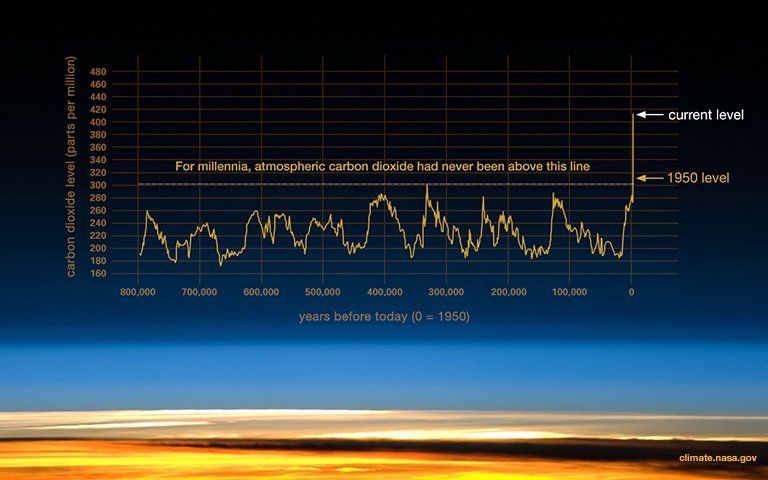
Atmospheric + Carbon + Dioxide + Millenia (search)
The best antidote for despair is action.

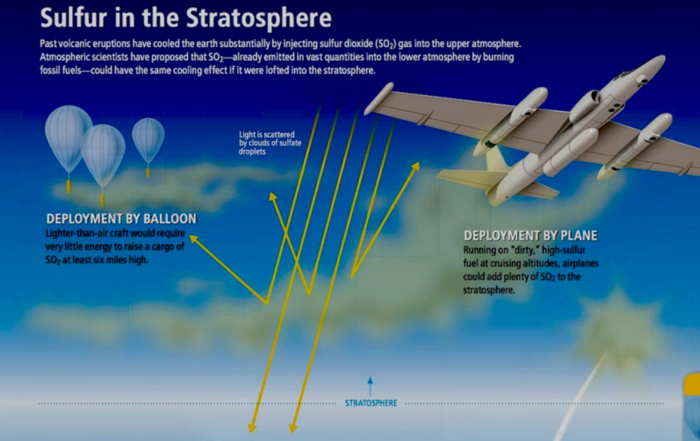
One technical solution to reduce earth’s temperature is spraying sulphate, which is a chemical, in earth’s upper atmosphere. This sulphate will have low concentration and will reflect a portion of the sunlight falling on earth which can reduce earth’s temperature. Whether people like or not, care about it or not, if someone is able to create a business model to profit off this solution, it may be a possible solution to implement, once climate catastrophes start: https://medium.datadriveninvestor.com/what-is-our-plan-b-for-climate-change-6cab424dcb0c
A world with no ice’:
Confronting the horrors of climate change
Google Search for Geoengineering
CO2 related to Climate Change
Graphic: The relentless rise of carbon dioxide
Climate Time Machine
Citizens Climate Lobby . org
In 1965, leading scientists of the day produced a report for President Lyndon B. Johnson on the rampant pollution of the environment. It included a section that summed up their understanding of climate change.
…::” I used to think that top global environmental problems were biodiversity loss, ecosystem collapse, and climate change. I thought that with 30 years of good science we could address these problems,
but I was wrong.
The top environmental problems are selfishness, greed, and apathy, and to deal with these we need a spiritual and cultural transformation (aka: empathy). And we scientists don’t know how to do that.”
~Gus Speth
Several long-term climate models, though their details differ, all agree that anthropogenic CO2 takes an enormously long time to dissipate. If all recoverable fossil fuels were burnt up using today’s technologies, after 1,000 years the air would still hold around a third to a half of the CO2 emissions. “For practical purposes, 500 to 1000 years is ‘forever,’” as Hansen and colleagues put it. https://www.nature.com/articles/climate.2008.122
“Power-Over” (control) is the opposite of empathy.
According to psychologist David Matsumoto and his colleagues, combining feelings of disgust with contempt and anger is particularly potent. Leaders who generate these three emotions at once can engender violence against the targets of their dehumanization. https://empathymatters.org/now/schaden-freude/