
 Carl Rogers
 Marshall Rosenberg
 Richard Schwartz
Personal Thoughts on Teaching
and Learning (1952) ~Carl Rogers
I wish to present some very brief remarks, in the hope that if they bring forth any reaction from you, I may get some new light on my own ideas.
My experience is that I cannot teach another person how to teach. To attempt it is for me, in the long run, futile.
It seems to me that anything that can be taught to another is relatively inconsequential and has little or no significant influence on behavior.
I realize increasingly that I am only interested in learnings which significantly influence behavior.
I have come to feel that the only learning which significantly influences behavior is self-discovered, self-appropriated learning.
Such self-discovered learning, truth that has been personally appropriated and assimilated in experience, cannot be directly communicated to another.
As a consequence of the above, I realize that I have lost interest in being a teacher.
When I try to teach, as I do sometimes, I am appalled by the results, which seems a little more than inconsequential, because sometimes the teaching appears to succeed. When this happens I find that the results are damaging. It seems to cause the individual to distrust his own experience, and to stifle significant learning. Hence, I have come to feel that the outcomes of teaching are either unimportant or hurtful.
When I look back at the results of my past teaching, the real results seem the same – either damage was done – or nothing significant occurred. This is frankly troubling.
As a consequence, I realize that I am only interested in being a learner, preferably learning things that matter, that have some significant influence on my own behavior.
I find it very rewarding to learn, in groups, in relationships with one person as in therapy, or by myself.
I find that one of the best, but most difficult, ways for me to learn is to drop my own defensiveness, at least temporarily, and to try to understand the way in which this experience seems and feels to the other person.
I find that another way of learning for me is to state my own uncertainties, to try to clarify my puzzlements, and thus get closer to the meaning that my experience actually seems to have.
~Carl Rogers
“Empathy Practice”
An empathic “training regimen” might contribute to becoming more empathic. In addition to practicing mindfulness or empathic meditation, such a regimen could include:
- Committing to the intention of becoming a person who listens to others in ways that are accepting, empathic, and respectful.
- Developing an empathic listening practice. Reflecting on these experiences and then… repeating… repeating… and repeating them over time and across situations.
Carl Rogers wrote in personal ways about his core conditions. Contemplating his perspective is part of developing an empathic orientation.
“I come now to a central learning which has had a great deal of significance for me. I can state this learning as follows: I have found it of enormous value when I can permit myself to understand another person. The way in which I have worded this statement may seem strange to you. Is it necessary to permit oneself to understand another? I think that it is.
Our first reaction to most of the statements that we hear from other people is an immediate evaluation or judgment, rather than an understanding of it. When someone expresses some feeling or attitude or belief, our tendency is, almost immediately, to feel “That’s right”; or “That’s stupid”; “That’s abnormal”; “That’s unreasonable”; “That’s incorrect”; “That’s not nice.” Very rarely do we permit ourselves to understand precisely what the meaning of [the] statement is to him [or her or them]. I believe this is because understanding is risky. If I let myself really understand another person, I might be changed by that understanding.” (Rogers, 1961, p. 18; italics in original)
workplace Work-place work Work Workplace
The Conflict: Empathy vs. Managerial Action
Carl Rogers’ person-centered approach (PCA) in a workplace setting encounters significant challenges when dealing with traditional management practices, particularly regarding disciplinary actions like firing an employee. The core tension lies between the manager’s need for performance metrics and the PCA’s emphasis on trust, empathy, and unconditional positive regard.
Managers often operate from a framework of performance, efficiency, and clear standards, where removing an underperforming or non-compliant individual is a necessary solution for the team’s overall productivity. This is a results-oriented, often “biomedical” or “mechanistic” approach to organizational health.
Rogers’ approach, in contrast, posits that an environment of unconditional positive regard (accepting individuals without judgment), empathy, and congruence (genuineness) is necessary for people to feel safe enough to grow, self-actualize, and find their own solutions. In the specific scenario you described:
Manager’s Perspective: Removing an individual is a customary managerial function (a “gatekeeping” role) to maintain “standards” and motivate the team’s success.
Rogers’ Perspective: Unconditional acceptance and empathy are paramount for fostering a secure environment. Terminating someone without fully understanding their perspective, involving them in the solution-finding process, and providing an environment for potential growth would violate the trust of the entire group. The remaining employees would perceive a lack of fairness and a risk to their own security, leading to a breakdown in psychological safety and trust.
https://pmc.ncbi.nlm.nih.gov/articles/PMC8950126/#:~:text=5.,as%20a%20barrier%20to%20PCC.
ACTIVE LISTENING (excerpt)
by Carl R. Rogers and Richard E. Farson
A person’s listening ability is limited by his ability to listen to himself.
ACTIVE LISTENING AND COMPANY GOALS
( Common mistaken management assumption.)
“Sometimes we have to sacrifice an individual for the good of the rest of the people in the company.”
Response:
Those of us who are trying to advance the listening approach in industry hear these comments frequently.
Individual Importance:
Our (Carl Rogers) answer is based on an assumption that is central to the listening approach. That (Carl Rogers) assumption is: the kind of behavior that helps the individual will eventually be the best thing that could be done for the group. Or saying it another way: the things that are best for the individual are best for the company. This is a conviction of ours, based on our experience in psychology and education.
We find that putting the group first, at the expense of the individual, besides being an uncomfortable individual experience does not unify the group. In fact, it tends to make the group less a group. The members become anxious and suspicious. We are not at all sure in just what ways the group does benefit from a concern demonstrated for an individual, but we have several strong leads. One is that the group feels more secure when an individual member is being listened to and provided for with concern and sensitivity. And we assume that a secure group will ultimately be a better group. When each individual feels that he need not fear exposing himself to the group, he is likely to contribute more freely and spontaneously. When the leader of a group responds to the individual, puts the individual first, the other members of the group will follow suit, and the group comes to act as a unit in recognizing and responding to the needs of a particular member.
This positive, constructive action seems to be a much more satisfying experience for a group than the experience of dispensing with a member.
https://empathymatters.org/now/empathy-circles#industry
Active Listening | Carl R. Rogers, Richard E. Farson (Audiobook) https://www.youtube.com/watch?v=IA41SChXXsU
Reflective Listening
Carl Rogers observed that: “Apparently the act of attending carefully to another person is a difficult task for most people. They are usually thinking what they will say when the speaker stops. Or they focus on some specific point made by the speaker and then fail to attend to the rest because they are thinking up arguments against that specific point.”
So what exactly is reflective listening? A reflection makes a guess about what the speaker means. However a good reflection is not phrased as a question but as a statement. That requires at least two specific changes in language. First, you eliminate any front-end words that mark it as a question: “Do you . . . ” … “Are you . . . ” … “Is it . . . “, and so on. Thus from the question “Do you mean that you are talented?” you would drop the words, “Do you mean that,” leaving only, “You are talented?” However that’s still a question. The other change is to get rid of that question mark at the end. When speaking English and most other European languages the difference is to inflect your voice down rather than up at the end of the sentence.
Try it. Note the difference in spoken words between: You are talented? and You are talented. You’re unhappy? and You’re unhappy.
It has to do with how you use your voice. So in order to turn a question into a reflection, remove the question words and also inflect your voice downward at the end so that it is a statement instead of a question. If you’re having trouble coming up with a reflective statement, you can start out by first thinking the question (Do you mean that you . . . ) and then make those two changes. Just start with “You” and turn your voice down at the end. Good reflective listening is more complex than this, but it’s a head start.
It usually feels strange at first to be making a statement rather than asking a question. After all, you know that what you are saying is a guess, so shouldn’t you be asking instead of telling? Isn’t that putting words in the person’s mouth? What if your guess were wrong? Something in you mightily wants to turn the inflection up at the end to make it a question. Trust me that it’s usually better to use the form of a statement when reflecting, even though it feels odd to you at first. Here is one reason why. Linguistically a question places a demand on the person for an answer. It is a subtle pressure, a micro-interrogation. Statements typically don’t have that effect. Suppose for example that someone were expressing some frustrations to you about a conversation with her mother. Speak these two lines aloud as a listener: You’re angry with your mother?… You’re angry with your mother…
It’s all in the inflection of the voice, and there are many different ways to read these lines. Can you sense a subtle difference, though, in how the speaker may respond depending on whether you ask a question or make a statement? There is just something about a question that often makes the speaker want to take it back, or at least have second thoughts about whether she should have said it.
Now imagine that you’re talking to a teenager who has misbehaved in some way. Speak these two lines aloud as a listener: You don’t see anything wrong with what you did?… You don’t see anything wrong with what you did… Can you feel the difference? Somehow the question implies that the person should see something wrong, even if that’s not your intention. The statement does not have this connotation, inviting the person to respond more honestly and less defensively.
~Miller, William R.. Listening Well: The Art of Empathic Understanding
https://empathymatters.org/now/empathy-circles/?#Reflective-Listening
”Empathy is the ability to listen and consider others’ thoughts and feelings (appreciating their perspective). This approach has allowed us to foster stronger relationships with one another.
Carl Rogers himself detailed these steps in his seminal works, such as “On Becoming a Person” and “A Way of Being”. He defined the three essential conditions for growth as Empathy, Congruence (genuineness), and Unconditional Positive Regard.
The Refinement Process: Psychologist Eugene Gendlin, a colleague of Rogers, explicitly described the “cycle” of listening you mentioned: making a summary, checking it with the speaker, and letting them correct or add to it until they agree you have it exactly as they feel it.
Active Listening Fundamentals: The 1957 paper “Active Listening” by Carl Rogers and Richard Farson is the primary source for the technique of paraphrasing feelings and meaning to ensure a speaker feels fully validated.
Clinical Applications: Modern resources like Mind Beacon and the UNSW Staff Teaching Gateway provide structured guides on these exact steps: listening for underlying emotions, paraphrasing to ensure understanding, and asking the speaker to correct misconceptions.
Summary of the Rogerian Process
Deep Listening: Focus on both the factual content and the emotional “flavor” of the speaker’s words.
Reflective Paraphrasing: State back what you understood, specifically naming the feelings you perceived.
Collaborative Correction: Explicitly ask, “Did I get that right?” or “Is there more to it?” to allow the speaker to refine your understanding.
Validation: The goal is not to agree or disagree, but to provide a “mirror” that makes the speaker feel heard without judgment.
The Empathic Civilization
Through all of the great stages of human history—forager/hunter, hydraulic agriculture, and the First, Second, and emerging Third Industrial Revolutions—human consciousness, expanded to encompass the complex energy/communications structures we created.
Mythological consciousness, theological consciousness, ideological consciousness, psychological consciousness, and now dramaturgical consciousness mark the evolutionary passages of the human psyche. And with each successive reorientation of consciousness, empathic sensibility reached new heights. But the increasing complexity of human social arrangements also came with greater stresses, and more terrifying implosions, especially when the strains produced by increasing differentiation and individuation came up against the demands for increasing integration into the new complex systems we created. Human beings have not always been successful at readjusting their own spatial and temporal orientations to accommodate the many new societal demands made on their physiology and psyche. Even though we are a deeply social animal that seeks inclusion and yearns for a universal embrace, our biology predisposes us to intimate units of 30 to 150 individuals. And herein lies still another of the enigmas that makes us the only creature to exhibit a true sense of awe and angst.
The search for intimacy and universality at the same time continually forces the human mind to stretch itself in both directions. Although the two realms often appear at odds, the reality is that human beings are forever searching for “universal intimacy”—a sense of total belonging. What appears to be a strange confluence of opposites is really a deeply embedded human aspiration. It is our empathic nature that allows us to experience the seeming paradox of greater intimacy in more expansive domains. The quest for universal intimacy is the very essence of what we mean by transcendence. Occasionally, the pull between individuation and integration and the related drive for both intimacy and universality becomes too strained. Either the new connection fails or the existing connection snaps. It is in these moments of pure terror and dread, when the society stumbles, losing a firm grip on its own sense of intimacy and universality, that the wholesale fears of humanity are let loose, in the form of uncontrollable oppression and violence. Every great civilization has had its fair share of holocausts.
The empathic predisposition that is built into our biology is not a fail-safe mechanism that allows us to perfect our humanity. Rather, it is an opportunity to increasingly bond the human race into a single extended family, but it needs to be continually exercised. Lamentably, the empathic drive is often shunted aside in the heat of the moment when social forces teeter on disintegration.
We may be approaching such a moment now. The Third Industrial Revolution and the new era of distributed capitalism allow us to sculpt a new approach to globalization, this time emphasizing continentalization from the bottom up. Because renewable energies are more or less equally distributed around the world, every region is potentially amply endowed with the power it needs to be relatively self-sufficient and sustainable in its lifestyle, while at the same time interconnected via smart grids to other regions across countries and continents.
The Empathic Civilization,
Rifkin, Jeremy.
—

roadblock road-block roadblocks road-blocks
What Active Listening is not:
-
- Jumping in with “help” in the form of “good advice”
- Questioning to get at the “facts”
- Reassuring to make them “feel better”
Simply put,
roadblocks take the conversational ball
out of the speaker’s hands
and puts it firmly into the listener’s.
The 12 Roadblocks to Communication:
https://www.gordonmodel.com/work-roadblocks.php

🌱 IFS & Peace 🌿 See Chat
See Chat
🌱 IFS & Projection 🌿 See Chat
Question: Why do we humans project our unconscious “parts” onto other human beings, while not even seemingly noticing that we are doing that?
Answer: This phenomenon touches right at the heart of human psychology and our relational patterns.
From an IFS perspective, we project our unconscious parts onto others because these parts carry burdens that feel too painful, threatening, or overwhelming to acknowledge directly.
Think of it like this: when we have an exile carrying deep hurt or shame, or a manager/firefighter working overtime to keep us safe, these parts operate beneath our conscious awareness.
They become like shadows that we don’t even realize are there.
Here’s the fascinating part – our psyche is actually trying to protect us!
When we can’t bear to hold certain feelings or beliefs about ourselves, our system “outsources” them onto others. It’s much easier to see these qualities in someone else than to face them in our own inner world.
This creates what we might call “psychological blind spots” – we genuinely aren’t aware we’re doing this because the parts doing the projecting are themselves unconscious.
The process is almost like our internal parts are constantly asking: *”How can I keep this person safe from pain?”* And sometimes their answer is: *”By making sure they see the problem as ‘out there’ rather than ‘in here.'”*
This is where the beautiful work of making unconscious beliefs more conscious comes in – as mentioned in approaches like Coherence Therapy. When we develop what we might call a “harmony mindset” rooted in empathy, we begin to question our automatic judgments.
We start asking ourselves: *”What am I protecting myself from seeing? What part of me is being triggered right now?”* Carl Rogers’ concept of active listening becomes crucial here – when we truly listen to others (and ourselves) with curiosity rather than judgment, we often catch glimpses of these projections.
The key is approaching both our inner experience and others’ with genuine compassion.
The good news?
Every time we recognize this pattern, we’re reclaiming our projection and bringing it back into our own system where it can be witnessed, understood, and eventually unburdened.
It’s like taking back borrowed energy that was never ours to carry in the first place.
🌱 IFS & The 8 C’s 🌿 See Chat
The 8 C’s in IFS represent qualities of the Self – your core, wise essence that naturally emerges when you’re in Self-leadership:
1. **Curiosity** – Genuine interest in understanding your parts without judgment
2. **Compassion** – Deep caring and kindness toward all your parts
3. **Calm** – Peaceful, centered presence even amid inner turmoil
4. **Clarity** – Clear seeing of what’s happening inside
5. **Confidence** – Trust in your ability to navigate internal experiences
6. **Courage** – Willingness to face difficult feelings and memories
7. **Connectedness** – Feeling linked to others and something greater
8. **Creativity** – Access to new solutions and possibilities When you lead from Self rather than from your parts, these qualities naturally arise.
For example, instead of being overwhelmed by an anxious part (which might make you act from fear),
Self-leadership allows you to approach that part with curiosity and compassion.
These Self qualities are essential for healing – they create the safe, trusting environment parts need to share their burdens and eventually let them go.
They also model how we might approach global conflicts: with curiosity about different perspectives, compassion for all involved, and the courage to find creative solutions together.
“The finest emotion of which we are capable is the mystic emotion. Herein lies the seed of all art and all true science. Anyone to whom this feeling is alien, who is no longer capable of wonderment and lives in a state of fear is already dead.
~Albert Einstein
🌺🌺🌺
..::”For me, the Jewish religion, like all others, is an incarnation of the most childish superstitions… And the Jewish people have no different quality for me than all other people”.
🌺🌺🌺
Einstein viewed the “cult of individuals” as unjustified and often in bad taste, noting that it was unfair to select a few for “boundless admiration” while ignoring everyone else.
(He explicitly stated he could not see anything “chosen”
about Jewish people)
”Refusing humility traps you in delusion.
One and the same.
~Marshall Rosenberg
🌺🌺🌺
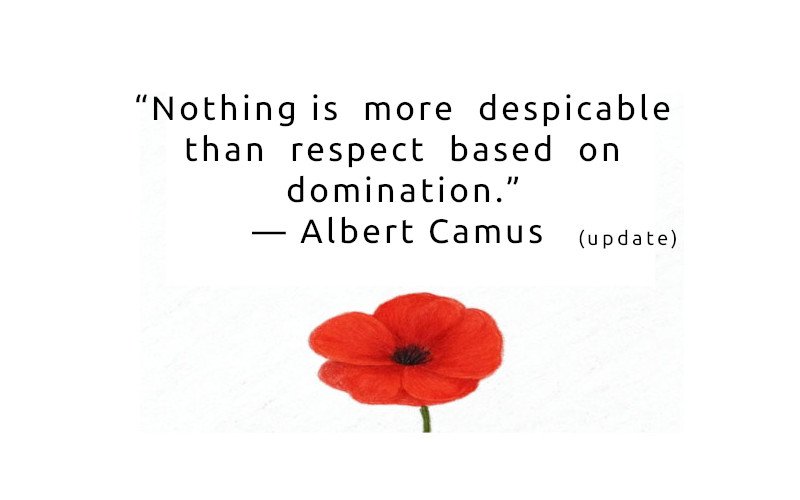
“Nothing is more despicable than respect based on fear.”
🌺🌺🌺
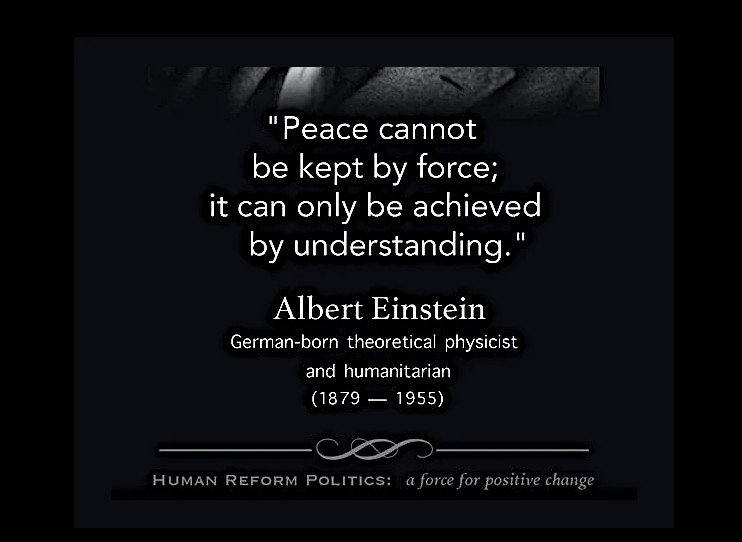


Imagine living on the only known planet in the infinite universe, where the mortified rich get richer by colonizing the people to follow debunked dogma, repeating an ancient doctrine of war, projected onto innocent children, again and again, the rich get richer, and the children inherit a brutal indoctrination instead of Living Sacred Life. https://empathymatters.org/armageddon/

The phrase “Domination leads to Ritual Sacrifice” bridges the gap between historical sociology and ancient anthropology.
Throughout history, domination—the exertion of control, barbaric power, or authority over others—has frequently been inextricably linked to ritual human sacrifice.
This connection manifests in both structural power dynamics and ancient religious practices.
The transition from domination to human sacrifice is essentially the barbaric projection of unhealed guilt onto other human beings, often innocent children.
What’s #memoricide ?
It’s time to save our stories, our history, our truth.
#emmaswords #wordsmatter
"The myth [has been shattered] that the state of Israel has any interest in Jewish safety."
— Zeteo (@zeteo_news) May 27, 2026
Hannah Einbinder, @mahmoudkhalel, Isabella Hammad, and @simonerzim unpack the "shattering" myths of Zionism. pic.twitter.com/atJTF7xCzd
Amos Goldberg, Professor of Genocide Studies at The Hebrew University in Jerusalem "Yes, it is genocide. It's so difficult and painful to admit it, but we can no longer avoid this conclusion. Jewish history will henceforth be stained"
— BladeoftheSun (@BladeoftheS) May 27, 2026
Is there anyone more qualified and unbiased? pic.twitter.com/gAx1J2o1QN
via Brad Blinstrub ” Amen. What we are seeing is the march of the Khazars. A disaster renamed Israel.
via EnterTheUnseen ” If you truly understand the bridge between Spirit & psyche, you’d NEVER condone forcing religious beliefs on others &/or disempowering people’s spiritual decision making. It’s abusive behavior that breeds religious trauma, which creates fear-based neural associations to divinity.
1 of 3