carl_rogers

Carl Rogers: Reflections of Feelings

How can i go wrong by saving a human Life…

The Significance of a Human Life…
~Adyashanti

https://www.youtube.com/watch?v=-3NRqoWtIjQ

💜 ♥️ ❤️ 💜 ♥️ ❤️ 💜♥️💜  ❤️ 💜 ♥️ ❤️ 💜

How to #Understand the #Science of #Emotions

How many years have we been guessing someone’s #feelings, #emotions, and #facial #expressions?

https://empathymatters.org/now/carl-rogers_reflections-of-feelings/

Dr. Lisa Feldman Barrett, Ph.D., a Distinguished Professor of Psychology at Northeastern University who is a world expert in the science of emotions. She explains what emotions are and how the brain represents and integrates signals from our body and the environment around us to create our unique emotional states. We discuss the relationship between emotions and language, how our specificity of language impacts our emotional processing, the role of facial expressions in emotions, and how emotions relate to sleep, movement, nutrition and the building and reinforcement of social bonds. We also discuss actionable tools for how to regulate feelings of uncertainty and tools to better understand the emotional states of others. This episode ought to be of interest to anyone curious about the neuroscience and psychology underlying emotions and for those who seek to better understand themselves and relate to others and the world in richer, more adaptive ways.

#HubermanLab #Science #Emotions

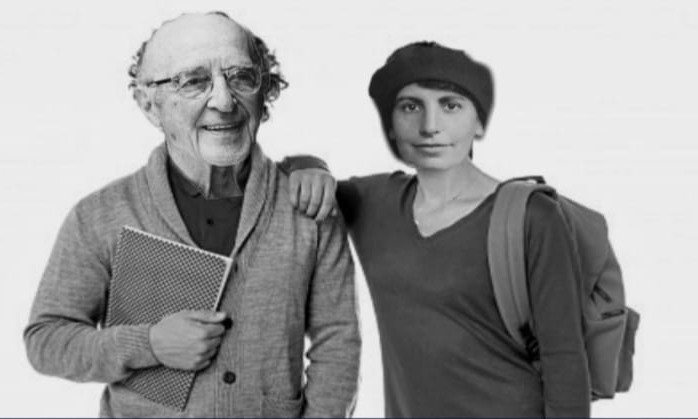
carl_rogers

Carl Rogers: Reflections of Feelings

REF: Carl Rogers :: Reflections of Feelings … https://www.centerfortheperson.org/product/reflections-of-feelings/

“Although I am partially responsible for the use of this term to describe a certain type of therapist response, I have, over the years, become very unhappy with it. A major reason is that “reflection of feelings” has not infrequently been taught as a technique, and sometimes a very wooden technique at that. On the basis of written client expressions, the learner is expected to concoct a “correct” reflection of feeling – or even worse, to select the “correct” response from a multiple-choice list. Such training has very little to do with an effective therapeutic relationship. So I have become more and more allergic to the use of the term….

I have come to a double insight.

From my point of view as therapist, I am NOT trying to “reflect feelings”.

 I am trying to determine whether my understanding of the client’s inner world is correct – whether I am seeing it as s/he is experiencing it at this moment. Each response of mine contains the unspoken question, ‘Is this the way it is in you?
~Carl Rogers

The Conditions of Change of Self Perception https://psychclassics.yorku.ca/Rogers/personality.htm


..::” The most dangerous psychological mistake is the PROJECTION of the shadow onto others. This is the root of almost all conflicts.
~Carl Jung

__________________________________________

Amts-sprache” … (This expression was used by Nazi officials to describe a bureaucratic language that denies choice, with words like: “should,” “have to,” “ought.”)

https://www.cnvc.org/what-nvc/articles-writings/anger-and-domination-systems/anger-and-domination-systems

___________________________________________

..::” If we do anything to harm someone else” a powerful new factor comes into PLAY: the need to JUSTIFY what you did”. once the persecutor starts down the path of BLAMING THE VICTIM, he becomes likely to physically and psychologically attack the victim with even GREATER ferocity the next chance he gets. 
~ Mistakes Were Made (but not by me) By Carol Tavris and Elliot Aronson 

___________________________________________

..::” Until you make the unconscious conscious… it will direct your life… and you will call it fate. ~ Carl Jung

___________________________________________ 

“NVC can be particularly harmful to marginalized people or abuse survivors. ~RSS 

“NVC can also teach “powerful people” to abuse their power more than they had previously and to feel good about doing so.  ~RSS  

NVC has strategies that can be helpful in some situations, but it also teaches a lot of anti-skills that can undermine the ability to survive. ~RSS 

Every group I’ve seen that valued this type of language highly, ended up nitpicking the language of the least powerful person in the group.  ~REALsocialSkills . org

nonviolent-communication-can-hurt-people

empathy-exclusion

Empathy, Group Identity, and the Mechanisms of Exclusion: An Investigation into the Limits of Empathy


Thomas Fuchs


Abstract


There is a conspicuous tendency of humans to experience empathy and sympathy preferentially towards members of their own group, whereas empathetic feelings towards outgroup members or strangers are often reduced or even missing. This may culminate in a “dissociation of empathy”: a historical example are the cases of Nazi perpetrators who behaved as compassionate family men on the one hand, yet committed crimes of utter cruelty against Jews on the other.


The paper aims at explaining such phenomena and at determining the limits of empathy. To this purpose, it first distinguishes between two levels of empathy, namely primary or intercorporeal and extended or higher-level empathy. It then investigates the mutual interconnection of empathy and recognition, which may be regarded as a principle of extending empathy to others regardless of whether they belong to one’s own group or not.


However, this principle is in conflict with in group conformism and outgroup biases that hamper the universal extension of empathy.


Thus, a denial of recognition and exclusion of others from one’s ingroup usually results in a withdrawal or lack of extended empathy which then influences primary empathy as well.


On this basis, and using the historical example of mass executions during the Holocaust, the paper investigates the mechanisms of exclusion that may lead to a withdrawal of recognition and finally to a dissociation of empathy.


Introduction


There is a conspicuous tendency of humans to experience empathy, and even more so sympathy, preferentially towards members of their own group. On the contrary, empathetic feelings toward out-group members or strangers may often be diminished or even be missing completely.


This may culminate in a compartmentalization or dissociation of empathy: a well-known historical example can be seen in the cases of Nazi perpetrators who behaved as compassionate family men on the one hand, yet committed crimes of utter cruelty against Jews on the other, apparently with little or no feelings of empathy or pity.


Sadly enough, one could add many other examples such as the genocide perpetrated by the Serbs against the Bosnians in the Balkan war, or by the Hutu against the Tutsi in Rwanda, both occurring in the 90s of the last century.


In all these cases, the crimes were committed against a group that had previously lived in peaceful neighborhoods with the perpetrators and had first to be defined as an outgroup, often on the basis of highly questionable criteria.


Thus, the capacity of empathy as such is apparently not sufficient to be felt and realized towards all members of the human species as a matter of course. A first assumption would be that its extension beyond the primary group requires an additional identification with the other as one’s equal, which in social philosophy is usually conceived as a relationship of reciprocal recognition.


A further conclusion can be drawn from the historical examples: through a kind of redefinition and a corresponding reframing of interpersonal perception, recognition may be withdrawn or denied.


Then people who previously belonged quite naturally to one’s own community, right up to one’s immediate neighbors or acquaintances, may suddenly become outsiders, pariahs, or unpersons towards whom even basal human feelings of empathy or compassion are no longer felt. Empathy may then be “unhooked”, as it were, or dissociated.


The question of how this unsettling dissociation of empathy may be explained is the central topic of my paper. This question is not easy to answer, and to prepare the ground, we will need a rather broad basis in social philosophy and psychology. An important concept in this context consists in the notion of recognition as introduced famously by Hegel in the Phenomenology of Mind (1807 / 1967), and readopted more recently by Cavell (1969), Taylor (1992), and Honneth (1996,2008), among others. The recognition or acknowledgment of the other as a person to whose claim or call I have to respond has been proposed as a fundament of human relationships, sometimes even as a presupposition of empathy itself.


Recognition may be denied, however, in particular as a result of a deprivation of the fundamental claims and rights that a person enjoys as a member of a community of mutual obligations. Such experiences of misrecognition and social exclusion often result in a “struggle for recognition” (Honneth 1996) on the part of individuals or whole groups who suffer from the discrimination.


They are usually connected to a withdrawal or lack of empathetic feelings on part of the members of the discriminating group. This helps to specify the question I want to investigate in the following, namely how empathy is connected to (a) recognition and (b) group identity in such a way that a lack or loss of empathetic feelings may occur under certain circumstances.


This can be further expressed by the following questions:


– What is the nature of empathy? Should we regard it as a primary form of interpersonal connectedness or rather as being dependent on antecedent recognition and identification with the other?


– How far does empathy reach? Is there something like a general empathetic disposition (“universal empathy”) that can be restricted or suspended secondarily, or is empathy only gradually and under certain conditions extended from one’s kin to outgroup members?


– What are the presuppositions for a withdrawal of empathy from other people? What are the mechanisms of exclusion that cause a dissociation of empathy?

 
https://www.academia.edu/38296434/Empathy_Group_Identity_and_the_Mechanisms_of_Exclusion


The antithesis of Empathy


flying_monkey


Flying Monkeys

‘Flying Monkey’ is the term given to those ‘agents‘ and allies that collude with an ‘abusive’ person.


The role of each ‘Flying Monkey’ is to continue carrying out the initial abuse by tormenting the ‘victim’ on the abuser’s behalf. The abuser gets to ‘abuse by proxy’ since it is the ‘Flying Monkeys’ that are getting their hands dirty, while the abuser wears a ‘mask’ of innocence.


It is a way of perpetuating abuse.  Again, the abuser’s hands appear to be ‘clean’ since the ‘Flying Monkeys’ are doing the ‘dirty work’ for the abuser.


So why does the narcissist need allies?


First of all, regardless of what happened, narcissists believe the victim deserves ‘punishment’.  Narcissists do not accept any responsibility for their actions, but neither do they want to accept the consequences.  Narcissists believe they are right, justified, and entitled. To the Narcissist, it is ‘always’ the victim’s fault, and in their world, winning is never enough. They desire to destroy the victim, their support network, self-esteem, reputation, and anything else they can ruin.


Narcissists live in a make-believe world, but they need others to believe in that world too. By recruiting flying monkeys, they are creating a cult around themselves with them at the center as the worshipful leader.


So they recruit others to do their dirty work for them, people who collude with them, and act as agents on their behalf. People who subscribe to their false version of reality.


Since the abuser carefully controls the information each ‘agent’ gets, they get to control the reality of their ‘cult’.


The more people they recruit to their ’cause’, the more they believe their own false narrative. They live in their own world of entitlement, self-righteousness, and false innocence.


The flying monkey’s main role is to discredit the victim.


REF: https://empathymatters.org/now/flying-monkeys/


SOURCE: https://sentientcounselling.co.uk/2020/08/14/flying-monkeys-agents-of-the-narcissist/


Image: jerome-k-moore.deviantart.com


When the narcissist curses your name publicly and demands total control… the “Smear Campaign” has begun.


Are You a Flying Monkey?

Flying monkeys often have strong narcissistic traits themselves, including a desire for attention, a lack of empathy, and a desire to bully and manipulate others. They may be involved in a family, work, or other situation in which they know that their best opportunity to fulfill their narcissistic desires comes from allying themselves with a more powerful narcissist.

 
https://www.psychologytoday.com/us/blog/women-autism-spectrum-disorder/202010/are-you-narcissist-s-flying-monkey
 
nvc-peace

“To know how we can be peaceful with ourselves when we’re less than perfect. For example: How we can learn from our limitations without blaming and punishing our self?  If we can’t do that, I’m not too optimistic how we’re going to relate peacefully out in the world. 
~Marshall Rosenberg  

feelngs-nvc

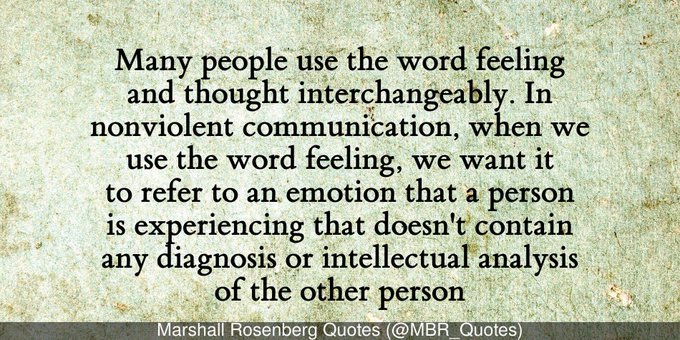
Many people use the word feeling and thought interchangeably. In nonviolent communication, when we use the word feeling, we want it to refer to an emotion that a person is experiencing that doesn’t contain any diagnosis or intellectual analysis of the other person.   https://empathymatters.org/now/flying-monkeys/

Lawhorn

https://empathymatters.org/now