Searching...

Exercise Menu
Video List
-/- Quote # 1 of 50
EmpathyMatters.org
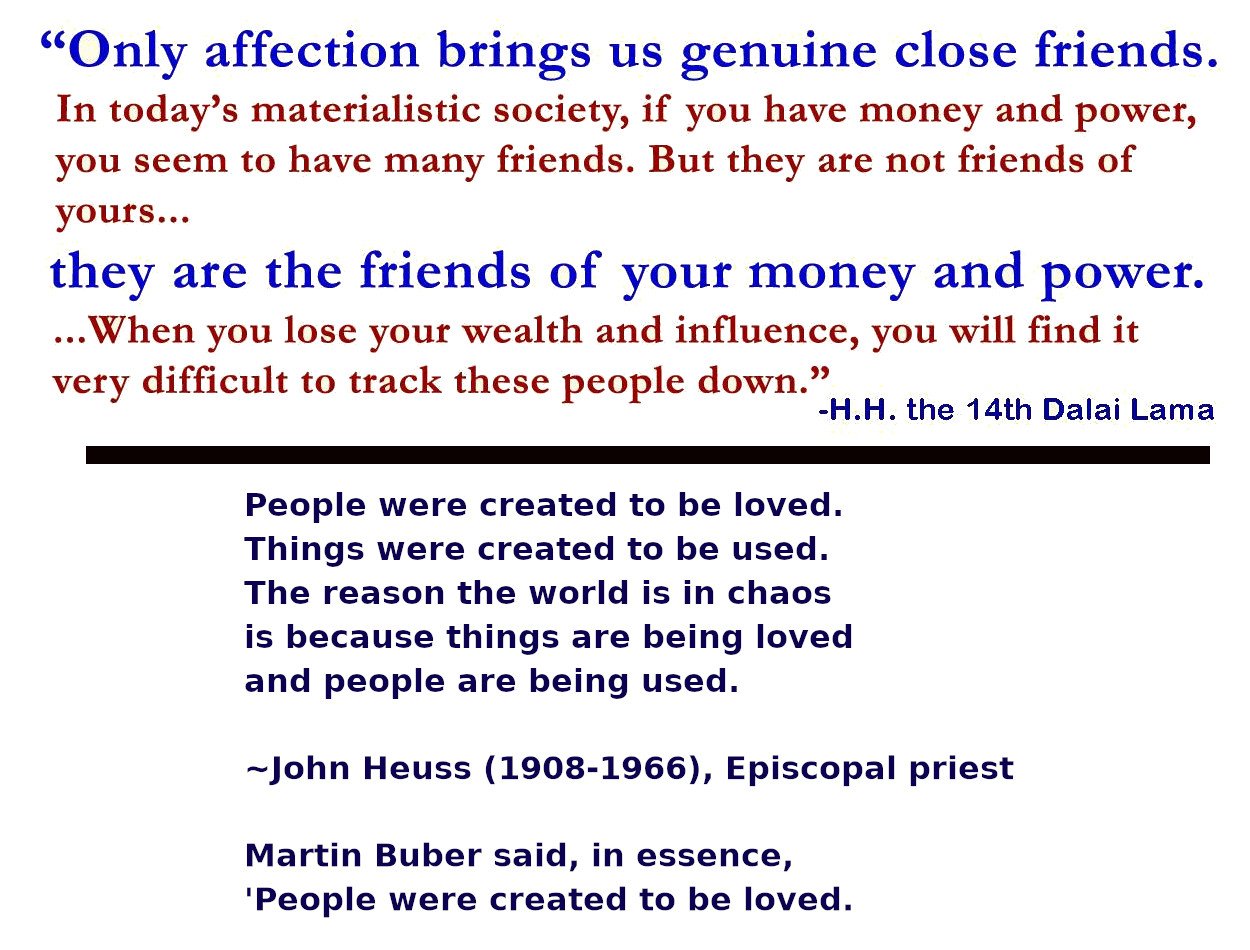
"When you are young, healthy, and strong, you sometimes can get the feeling that you are totally independent and do not need anyone else. But this is an illusion. Even at that prime age of your life, simply because you are a human being, you need friends, don’t you? ~14th Dalai Lama


-/- Quote # 2 of 50
EmpathyMatters.org
"Human potential is the same for all. Your feeling, “I am of no value”, is wrong. Absolutely wrong. You are deceiving yourself. We all have the power of thought – so what are you lacking? If you have willpower, then you can change anything. It is usually said that you are your own master. ~14th Dalai Lama


-/- Quote # 3 of 50
EmpathyMatters.org
"This will be #Rupert #Murdoch’s #legacy. Truth XR @TTTMediaXR


-/- Quote # 4 of 50
EmpathyMatters.org
"Full spiritual practice calls for cultivating wisdom in conjunction with great compassion and the intention to become enlightened in which others are valued more than yourself. Only then may your consciousness be transformed into the omniscience of a Buddha.
~14th Dalai Lama

Spiritual practice calls for cultivating wisdom in conjunction with great compassion and the intention to become enlightened in which others are valued as empathic equals. Then your consciousness can be transformed by Living the Truth. ~suggested update 🙂


-/- Quote # 5 of 50
EmpathyMatters.org Genuine Compassion

"Compassion and tolerance are not a sign of weakness, but a sign of strength.
~14th Dalai Lama


-/- Quote # 6 of 50
EmpathyMatters.org
"Compassion involves a feeling of closeness to others, a respect and affection that is not based on others’ attitude toward us. We tend to feel affection for people who are important to us. That kind of close feeling does not extend to our enemies—those who think ill of us.
Genuine compassion, on the other hand, sees that others, just like us, want a happy and successful life and do not want to suffer. That kind of feeling and concern can be extended to friend and enemy alike, regardless of their feelings toward us. That’s genuine compassion.
~14th Dalai Lama


-/- Quote # 7 of 50
EmpathyMatters.org inner tranquility


"From my own limited experience I have found that the greatest degree of inner tranquility comes from the development of love and compassion. The more we care for the happiness of others, the greater our own sense of well-being becomes. Cultivating a close, warm-hearted feeling for others automatically puts the mind at ease. This helps remove whatever fears or insecurities we may have and gives us the strength to cope with any obstacles we encounter. It is the ultimate source of success in life.~14th Dalai Lama


-/- Quote # 8 of 50
EmpathyMatters.org Like anyone else, I too have the potential

“Like anyone else, I too have the potential for violence; I too have anger in me. However, I try to recall that anger is a destructive emotion. I remind myself that scientists now say that anger is bad for our health; it eats into our immune system. So, anger destroys our peace of mind and our physical health. We shouldn’t welcome it or think of it as natural or as a friend. ~14th Dalai Lama


-/- Quote # 9 of 50
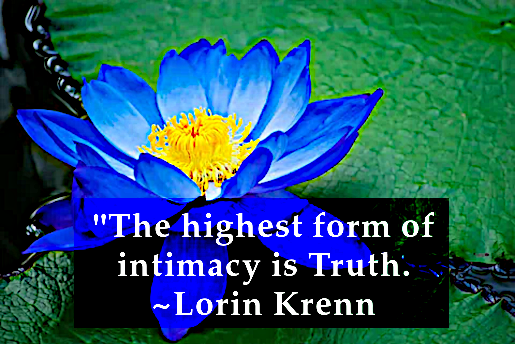
EmpathyMatters.org The highest form of intimacy is truth. ~Lorin Krenn

"The highest form of intimacy is truth. ~Lorin Krenn


-/- Quote # 10 of 50
EmpathyMatters.org ~Robin Sharma

Words can inspire. And words can destroy. Choose yours well. ~Robin Sharma


-/- Quote # 11 of 50
EmpathyMatters.org Like anyone else.

"Like anyone else, I too have the potential for violence; I too have anger in me. However, I try to recall that anger is a destructive emotion. I remind myself that scientists now say that anger is bad for our health; it eats into our immune system. So, anger destroys our peace of mind and our physical health. We should not welcome it or think of it as natural or as a friend.
~14th Dalai Lama


-/- Quote # 12 of 50
EmpathyMatters.org Teach only love. ~ACIM


-/- Quote # 13 of 50
EmpathyMatters.org Krishnamurti

We can understand ourselves only in relationship to the present;
and that relationship itself is the guru, not someone outside. ~Krishnamurti


-/- Quote # 14 of 50
EmpathyMatters.org The first PEACE

"The first PEACE, which is the most important... is that which comes within the souls of people when they realize their relationship, their ONENESS with the universe and all its powers, and when they realize at the center of the universe dwells the Great Spirit, and that its center is really everywhere, it is within each of us." ~Black Elk, Oglala Sioux


-/- Quote # 15 of 50
EmpathyMatters.org


Compassion and tolerance are not a sign of weakness, but a sign of strength.
~14th Dalai Lama


-/- Quote # 16 of 50
EmpathyMatters.org

Our own heart is the temple.
~14th Dalai Lama


-/- Quote # 17 of 50
EmpathyMatters.org

Compassion and tolerance are not a sign of weakness, but a sign of strength.
~14th Dalai Lama


-/- Quote # 18 of 50
EmpathyMatters.org


"Compassion involves a feeling of closeness to others, a respect and affection that is not based on others’ attitude toward us. We tend to feel affection for people who are important to us. That kind of close feeling does not extend to our enemies—those who think ill of us. Genuine compassion, on the other hand, sees that others, just like us, want a happy and successful life and do not want to suffer. That kind of feeling and concern can be extended to friend and enemy alike, regardless of their feelings toward us. That is genuine compassion. ~14th Dalai Lama


-/- Quote # 19 of 50
EmpathyMatters.org skeptical curiosity

"It is vital for us to obtain genuine confidence in the nature of mind and reality, grounded in understanding and reason. What we need is a skeptical curiosity and constant inquiry, a curious mind, drawn toward all possibilities; and when we cultivate that, the desire to deeply investigate naturally arises. ~A curious mind. ~14th Dalai Lama


-/- Quote # 20 of 50
..::" A great Zen master said, "Do not seek the truth; simply cease cherishing illusions." If there is a primary practice or path to enlightenment, this is it...to cease cherishing illusions. ~Adyashanti EmpathyMatters.org


-/- Quote # 21 of 50
EmpathyMatters.org
Our own heart is the temple. ~14th Dalai Lama


-/- Quote # 22 of 50
EmpathyMatters.org
"When we feel love and kindness toward others, it not only makes others feel loved and cared for, but it helps us also to develop inner happiness and peace. Our own heart is the temple.
~14th Dalai Lama


-/- Quote # 23 of 50
EmpathyMatters.org "Ultimately, humanity is one and this small planet is our only home, If we are to protect this home of ours, each of us needs to experience a vivid sense of universal altruism. It is only this feeling that can remove the self-centered motives that cause people to deceive and misuse one another. ~14th Dalai Lama


-/- Quote # 24 of 50
EmpathyMatters.org
"via Ed Hawkins @ed_hawkins · Climate change is simple.
We started burning fossil fuels during the industrial revolution, adding extra carbon dioxide to the atmosphere.
As a direct consequence - due to well understood physics - global temperatures started to increase.
We are now experiencing the consequences.


-/- Quote # 25 of 50
EmpathyMatters.org "People often expect the other person to respond first in a positive way, instead of taking the initiative to create that possibility. I feel that’s wrong; it can act as a barrier that just promotes a feeling of isolation from others. To overcome feelings of isolation and loneliness, your underlying attitude makes a tremendous difference – approaching others with the thought of compassion in your mind is the best way.
~14th Dalai Lama


-/- Quote # 26 of 50
EmpathyMatters.org "Even more important than the warmth and affection we receive, is the warmth and affection we give. It is by giving warmth and affection, by having a genuine sense of concern for others, in other words through compassion, that we gain the conditions for genuine happiness. More important than being loved, therefore,
is to love.
~14th Dalai Lama


-/- Quote # 27 of 50
EmpathyMatters.org "Along with love, compassion is the face of altruism. It is a feeling from deep in the heart that you cannot bear others’ suffering without acting to relieve it. As compassion grows stronger, so does your willingness to commit yourself to the welfare of all beings, even if you have to do it alone. You will be unbiased in your service to all beings, no matter how they respond to you.
~14th Dalai Lama


-/- Quote # 28 of 50
EmpathyMatters.org "Peace, in the sense of the absence of war, is of little value to someone who is dying of hunger or cold. It will not remove the pain of torture inflicted on a prisoner of conscience. It does not comfort those who have lost their loved ones in floods caused by senseless deforestation in a neighboring country. Peace can only last where human rights are respected, where the people are fed, and where individuals and nations are free.
~14th Dalai Lama


-/- Quote # 29 of 50
EmpathyMatters.org "With regard to selflessness, it is necessary to know what “self” is — to identify the self that does not exist. Then one can understand its opposite, selflessness. Selflessness is not a case of something that existed in the past becoming non-existent; rather, this sort of “self” is something that never did exist. What is needed is to identify as non-existent something that always was nonexistent, for due to not having made such identification, we are drawn into the afflictive emotions of desire and hatred as well as all the problems these bring.
~14th Dalai Lama


-/- Quote # 30 of 50
EmpathyMatters.org "At a fundamental level, as human beings, we are all the same; each one of us aspires to happiness and each one of us does not wish to suffer. This is why, whenever I have the opportunity, I try to draw people’s attention to what as members of the human family we have in common and the deeply interconnected nature of our existence and welfare.
~14th Dalai Lama


-/- Quote # 31 of 50
EmpathyMatters.org "My true religion, my simple faith is in love and compassion. There is no need for complicated philosophy, doctrine, or dogma. Our own heart, our own mind, is the temple. The doctrine is compassion. Love for others and respect for their rights and dignity, no matter who or what they are – these are ultimately all we need.
~14th Dalai Lama


-/- Quote # 32 of 50
EmpathyMatters.org

"If you cannot stop worrying over something in the past or what might happen in the future, shift your focus to the inhalation and exhalation of your breath. Or recite this mantra: om mani padme hum. Since the mind cannot concentrate on two things simultaneously, either of these meditations causes the former worry to fade. Our own heart is the temple
~ 14th Dalai Lama


-/- Quote # 33 of 50
EmpathyMatters.org "Unless you learn to face your own shadows, you will continue to see them in others, because the world outside you is only a reflection of the world inside you". ~Carl Jung


-/- Quote # 34 of 50
EmpathyMatters.org Dajian_Huineng

"You should not misinterpret the scriptures and conclude that omniscience is something special to the Buddha and not common to us all. ~Dajian Huineng
~Quote🌿


-/- Quote # 35 of 50
EmpathyMatters.org "I believe the ultimate source of blessings is within us. A good motivation and honesty bring self-confidence, which attracts the trust and respect of others. Therefore the real source of blessings is in our own mind.
~14th Dalai Lama
~ Dalai Lama🌿


-/- Quote # 36 of 50
EmpathyMatters.org "In some ways #generosity seems a crazy, counter-cultural way to behave. Instead of keeping our time, energy or possessions for ourselves, we give them away. There’s something very powerful about choosing to do this.
~14th Dalai Lama
~ Dalai Lama🌿


-/- Quote # 37 of 50
EmpathyMatters.org "If you want others to be happy, practice compassion. If you want to be happy, practice compassion.
~14th Dalai Lama
~ Dalai Lama🌿


-/- Quote # 38 of 50
EmpathyMatters.org "Making a habit of concern for others’ well-being, and spending a few minutes on waking in the morning reflecting on the value of conducting our lives in an ethically disciplined manner, is a good way to start the day. The same is true of taking some time at the end of each day to review how successful in this we have been. Such a discipline is very helpful in developing our determination not to behave self-indulgently.
~14th Dalai Lama
~ Dalai Lama🌿


-/- Quote # 39 of 50
EmpathyMatters.org "Compassion, a sense of caring, thinking about others’ welfare. That sort of attitude brings me inner peace.
It has defined the purpose of my life.
~14th Dalai Lama
~ Dalai Lama🌿


-/- Quote # 40 of 50
EmpathyMatters.org "One can be deceived by three types of laziness:
of indolence, which is the wish to procrastinate;
the laziness of inferiority, which is doubting your capabilities;
and the laziness that is attachment to negative actions,
or putting great effort into non-virtue.
~14th Dalai Lama
~ Dalai Lama🌿


-/- Quote # 41 of 50
EmpathyMatters.org
"True compassion is not just an emotional response but a firm commitment founded on reason.
~14th Dalai Lama
~ Dalai Lama🌿


-/- Quote # 42 of 50
All shallow roots
"All shallow roots (egoic projections) have to be uprooted, because they are not deep enough to sustain you. The illusion that shallow roots can be deepened and thus made to hold is one of the corollaries on which the reversal of the Golden Rule, referred to twice before, is balanced. As these false underpinnings are uprooted (or given up), equilibrium is experienced as unstable. But the fact is that nothing is less stable than an orientation which is upside down. Anything that holds it that way is hardly conducive to greater stability.

... “Hurling something you do not want... to someone else,” which is what projection does, “is the opposite of the Golden Rule” because it means giving to others what you do not want given to you. ~ACIM T-1.V.6 - Complete Edition
~Quote🌿


-/- Quote # 43 of 50
EmpathyMatters.org
“Comparison is an act of violence against the self. ~Iyanla Vanzant
~Quote🌿


-/- Quote # 44 of 50
EmpathyMatters.org
“The best gift you are ever going to give someone:
the permission to feel safe in their own skin.
To feel worthy. To feel like they are enough."
~ Hennah Brencher - Via The Minds Journal
~Quote🌿


-/- Quote # 45 of 50
EmpathyMatters.org Marianne Williamson
Marianne Williamson
”Our deepest fear is not that we are inadequate. Our deepest fear is that we are powerful beyond measure. It is our light, not our darkness that most frightens us. ~Marianne Williamson
-Share-
~Quote🌿


-/- Quote # 46 of 50
EmpathyMatters.org Marianne Williamson
~Quote🌿


-/- Quote # 47 of 50
Break the machine #Marianne2024
~Quote🌿


-/- Quote # 48 of 50
~Quote🌿


-/- Quote # 49 of 50
We need to ramp down fossil fuel extraction NOW! #Marianne2024 #climateemergency
~Quote🌿


-/- Quote # 50 of 50
EmpathyMatters.org


"Between the stimulus and response, there is a space... In that space lies our freedom and our power to choose our response... In our response lies our growth and our happiness. ~Viktor Frankl
~ Dalai Lama🌿


-/- Quote # 1 of 50
EmpathyMatters.org
"When you are young, healthy, and strong, you sometimes can get the feeling that you are totally independent and do not need anyone else. But this is an illusion. Even at that prime age of your life, simply because you are a human being, you need friends, don’t you? ~14th Dalai Lama


-/- Quote # 2 of 50
EmpathyMatters.org
"Human potential is the same for all. Your feeling, “I am of no value”, is wrong. Absolutely wrong. You are deceiving yourself. We all have the power of thought – so what are you lacking? If you have willpower, then you can change anything. It is usually said that you are your own master. ~14th Dalai Lama


-/- Quote # 3 of 50
EmpathyMatters.org
"This will be #Rupert #Murdoch’s #legacy. Truth XR @TTTMediaXR


-/- Quote # 4 of 50
EmpathyMatters.org
"Full spiritual practice calls for cultivating wisdom in conjunction with great compassion and the intention to become enlightened in which others are valued more than yourself. Only then may your consciousness be transformed into the omniscience of a Buddha.
~14th Dalai Lama

Spiritual practice calls for cultivating wisdom in conjunction with great compassion and the intention to become enlightened in which others are valued as empathic equals. Then your consciousness can be transformed by Living the Truth. ~suggested update 🙂


-/- Quote # 5 of 50
EmpathyMatters.org Genuine Compassion

"Compassion and tolerance are not a sign of weakness, but a sign of strength.
~14th Dalai Lama


-/- Quote # 6 of 50
EmpathyMatters.org
"Compassion involves a feeling of closeness to others, a respect and affection that is not based on others’ attitude toward us. We tend to feel affection for people who are important to us. That kind of close feeling does not extend to our enemies—those who think ill of us.
Genuine compassion, on the other hand, sees that others, just like us, want a happy and successful life and do not want to suffer. That kind of feeling and concern can be extended to friend and enemy alike, regardless of their feelings toward us. That’s genuine compassion.
~14th Dalai Lama


-/- Quote # 7 of 50
EmpathyMatters.org inner tranquility


"From my own limited experience I have found that the greatest degree of inner tranquility comes from the development of love and compassion. The more we care for the happiness of others, the greater our own sense of well-being becomes. Cultivating a close, warm-hearted feeling for others automatically puts the mind at ease. This helps remove whatever fears or insecurities we may have and gives us the strength to cope with any obstacles we encounter. It is the ultimate source of success in life.~14th Dalai Lama


-/- Quote # 8 of 50
EmpathyMatters.org Like anyone else, I too have the potential

“Like anyone else, I too have the potential for violence; I too have anger in me. However, I try to recall that anger is a destructive emotion. I remind myself that scientists now say that anger is bad for our health; it eats into our immune system. So, anger destroys our peace of mind and our physical health. We shouldn’t welcome it or think of it as natural or as a friend. ~14th Dalai Lama


-/- Quote # 9 of 50
EmpathyMatters.org The highest form of intimacy is truth. ~Lorin Krenn

"The highest form of intimacy is truth. ~Lorin Krenn


-/- Quote # 10 of 50
EmpathyMatters.org ~Robin Sharma

Words can inspire. And words can destroy. Choose yours well. ~Robin Sharma


-/- Quote # 11 of 50
EmpathyMatters.org Like anyone else.

"Like anyone else, I too have the potential for violence; I too have anger in me. However, I try to recall that anger is a destructive emotion. I remind myself that scientists now say that anger is bad for our health; it eats into our immune system. So, anger destroys our peace of mind and our physical health. We should not welcome it or think of it as natural or as a friend.
~14th Dalai Lama


-/- Quote # 12 of 50
EmpathyMatters.org Teach only love. ~ACIM


-/- Quote # 13 of 50
EmpathyMatters.org Krishnamurti

We can understand ourselves only in relationship to the present;
and that relationship itself is the guru, not someone outside. ~Krishnamurti


-/- Quote # 14 of 50
EmpathyMatters.org The first PEACE

"The first PEACE, which is the most important... is that which comes within the souls of people when they realize their relationship, their ONENESS with the universe and all its powers, and when they realize at the center of the universe dwells the Great Spirit, and that its center is really everywhere, it is within each of us." ~Black Elk, Oglala Sioux


-/- Quote # 15 of 50
EmpathyMatters.org


Compassion and tolerance are not a sign of weakness, but a sign of strength.
~14th Dalai Lama


-/- Quote # 16 of 50
EmpathyMatters.org

Our own heart is the temple.
~14th Dalai Lama


-/- Quote # 17 of 50
EmpathyMatters.org

Compassion and tolerance are not a sign of weakness, but a sign of strength.
~14th Dalai Lama


-/- Quote # 18 of 50
EmpathyMatters.org


"Compassion involves a feeling of closeness to others, a respect and affection that is not based on others’ attitude toward us. We tend to feel affection for people who are important to us. That kind of close feeling does not extend to our enemies—those who think ill of us. Genuine compassion, on the other hand, sees that others, just like us, want a happy and successful life and do not want to suffer. That kind of feeling and concern can be extended to friend and enemy alike, regardless of their feelings toward us. That is genuine compassion. ~14th Dalai Lama


-/- Quote # 19 of 50
EmpathyMatters.org skeptical curiosity

"It is vital for us to obtain genuine confidence in the nature of mind and reality, grounded in understanding and reason. What we need is a skeptical curiosity and constant inquiry, a curious mind, drawn toward all possibilities; and when we cultivate that, the desire to deeply investigate naturally arises. ~A curious mind. ~14th Dalai Lama


-/- Quote # 20 of 50
..::" A great Zen master said, "Do not seek the truth; simply cease cherishing illusions." If there is a primary practice or path to enlightenment, this is it...to cease cherishing illusions. ~Adyashanti EmpathyMatters.org


-/- Quote # 21 of 50
EmpathyMatters.org
Our own heart is the temple. ~14th Dalai Lama


-/- Quote # 22 of 50
EmpathyMatters.org
"When we feel love and kindness toward others, it not only makes others feel loved and cared for, but it helps us also to develop inner happiness and peace. Our own heart is the temple.
~14th Dalai Lama


-/- Quote # 23 of 50
EmpathyMatters.org "Ultimately, humanity is one and this small planet is our only home, If we are to protect this home of ours, each of us needs to experience a vivid sense of universal altruism. It is only this feeling that can remove the self-centered motives that cause people to deceive and misuse one another. ~14th Dalai Lama


-/- Quote # 24 of 50
EmpathyMatters.org
"via Ed Hawkins @ed_hawkins · Climate change is simple.
We started burning fossil fuels during the industrial revolution, adding extra carbon dioxide to the atmosphere.
As a direct consequence - due to well understood physics - global temperatures started to increase.
We are now experiencing the consequences.


-/- Quote # 25 of 50
EmpathyMatters.org "People often expect the other person to respond first in a positive way, instead of taking the initiative to create that possibility. I feel that’s wrong; it can act as a barrier that just promotes a feeling of isolation from others. To overcome feelings of isolation and loneliness, your underlying attitude makes a tremendous difference – approaching others with the thought of compassion in your mind is the best way.
~14th Dalai Lama


-/- Quote # 26 of 50
EmpathyMatters.org "Even more important than the warmth and affection we receive, is the warmth and affection we give. It is by giving warmth and affection, by having a genuine sense of concern for others, in other words through compassion, that we gain the conditions for genuine happiness. More important than being loved, therefore,
is to love.
~14th Dalai Lama


-/- Quote # 27 of 50
EmpathyMatters.org "Along with love, compassion is the face of altruism. It is a feeling from deep in the heart that you cannot bear others’ suffering without acting to relieve it. As compassion grows stronger, so does your willingness to commit yourself to the welfare of all beings, even if you have to do it alone. You will be unbiased in your service to all beings, no matter how they respond to you.
~14th Dalai Lama


-/- Quote # 28 of 50
EmpathyMatters.org "Peace, in the sense of the absence of war, is of little value to someone who is dying of hunger or cold. It will not remove the pain of torture inflicted on a prisoner of conscience. It does not comfort those who have lost their loved ones in floods caused by senseless deforestation in a neighboring country. Peace can only last where human rights are respected, where the people are fed, and where individuals and nations are free.
~14th Dalai Lama


-/- Quote # 29 of 50
EmpathyMatters.org "With regard to selflessness, it is necessary to know what “self” is — to identify the self that does not exist. Then one can understand its opposite, selflessness. Selflessness is not a case of something that existed in the past becoming non-existent; rather, this sort of “self” is something that never did exist. What is needed is to identify as non-existent something that always was nonexistent, for due to not having made such identification, we are drawn into the afflictive emotions of desire and hatred as well as all the problems these bring.
~14th Dalai Lama


-/- Quote # 30 of 50
EmpathyMatters.org "At a fundamental level, as human beings, we are all the same; each one of us aspires to happiness and each one of us does not wish to suffer. This is why, whenever I have the opportunity, I try to draw people’s attention to what as members of the human family we have in common and the deeply interconnected nature of our existence and welfare.
~14th Dalai Lama


-/- Quote # 31 of 50
EmpathyMatters.org "My true religion, my simple faith is in love and compassion. There is no need for complicated philosophy, doctrine, or dogma. Our own heart, our own mind, is the temple. The doctrine is compassion. Love for others and respect for their rights and dignity, no matter who or what they are – these are ultimately all we need.
~14th Dalai Lama


-/- Quote # 32 of 50
EmpathyMatters.org

"If you cannot stop worrying over something in the past or what might happen in the future, shift your focus to the inhalation and exhalation of your breath. Or recite this mantra: om mani padme hum. Since the mind cannot concentrate on two things simultaneously, either of these meditations causes the former worry to fade. Our own heart is the temple
~ 14th Dalai Lama


-/- Quote # 33 of 50
EmpathyMatters.org "Unless you learn to face your own shadows, you will continue to see them in others, because the world outside you is only a reflection of the world inside you". ~Carl Jung


-/- Quote # 34 of 50
EmpathyMatters.org Dajian_Huineng

"You should not misinterpret the scriptures and conclude that omniscience is something special to the Buddha and not common to us all. ~Dajian Huineng
~Quote🌿


-/- Quote # 35 of 50
EmpathyMatters.org "I believe the ultimate source of blessings is within us. A good motivation and honesty bring self-confidence, which attracts the trust and respect of others. Therefore the real source of blessings is in our own mind.
~14th Dalai Lama
~ Dalai Lama🌿


-/- Quote # 36 of 50
EmpathyMatters.org "In some ways #generosity seems a crazy, counter-cultural way to behave. Instead of keeping our time, energy or possessions for ourselves, we give them away. There’s something very powerful about choosing to do this.
~14th Dalai Lama
~ Dalai Lama🌿


-/- Quote # 37 of 50
EmpathyMatters.org "If you want others to be happy, practice compassion. If you want to be happy, practice compassion.
~14th Dalai Lama
~ Dalai Lama🌿


-/- Quote # 38 of 50
EmpathyMatters.org "Making a habit of concern for others’ well-being, and spending a few minutes on waking in the morning reflecting on the value of conducting our lives in an ethically disciplined manner, is a good way to start the day. The same is true of taking some time at the end of each day to review how successful in this we have been. Such a discipline is very helpful in developing our determination not to behave self-indulgently.
~14th Dalai Lama
~ Dalai Lama🌿


-/- Quote # 39 of 50
EmpathyMatters.org "Compassion, a sense of caring, thinking about others’ welfare. That sort of attitude brings me inner peace.
It has defined the purpose of my life.
~14th Dalai Lama
~ Dalai Lama🌿


-/- Quote # 40 of 50
EmpathyMatters.org "One can be deceived by three types of laziness:
of indolence, which is the wish to procrastinate;
the laziness of inferiority, which is doubting your capabilities;
and the laziness that is attachment to negative actions,
or putting great effort into non-virtue.
~14th Dalai Lama
~ Dalai Lama🌿


-/- Quote # 41 of 50
EmpathyMatters.org
"True compassion is not just an emotional response but a firm commitment founded on reason.
~14th Dalai Lama
~ Dalai Lama🌿


-/- Quote # 42 of 50
All shallow roots
"All shallow roots (egoic projections) have to be uprooted, because they are not deep enough to sustain you. The illusion that shallow roots can be deepened and thus made to hold is one of the corollaries on which the reversal of the Golden Rule, referred to twice before, is balanced. As these false underpinnings are uprooted (or given up), equilibrium is experienced as unstable. But the fact is that nothing is less stable than an orientation which is upside down. Anything that holds it that way is hardly conducive to greater stability.

... “Hurling something you do not want... to someone else,” which is what projection does, “is the opposite of the Golden Rule” because it means giving to others what you do not want given to you. ~ACIM T-1.V.6 - Complete Edition
~Quote🌿


-/- Quote # 43 of 50
EmpathyMatters.org
“Comparison is an act of violence against the self. ~Iyanla Vanzant
~Quote🌿


-/- Quote # 44 of 50
EmpathyMatters.org
“The best gift you are ever going to give someone:
the permission to feel safe in their own skin.
To feel worthy. To feel like they are enough."
~ Hennah Brencher - Via The Minds Journal
~Quote🌿


-/- Quote # 45 of 50
EmpathyMatters.org Marianne Williamson
Marianne Williamson
”Our deepest fear is not that we are inadequate. Our deepest fear is that we are powerful beyond measure. It is our light, not our darkness that most frightens us. ~Marianne Williamson
~Quote🌿


-/- Quote # 46 of 50
EmpathyMatters.org Marianne Williamson
~Quote🌿


-/- Quote # 47 of 50
Break the machine #Marianne2024
~Quote🌿


-/- Quote # 48 of 50
~Quote🌿


-/- Quote # 49 of 50
We need to ramp down fossil fuel extraction NOW! #Marianne2024 #climateemergency
~Quote🌿


-/- Quote # 50 of 50
EmpathyMatters.org


"Between the stimulus and response, there is a space... In that space lies our freedom and our power to choose our response... In our response lies our growth and our happiness. ~Viktor Frankl
~ Dalai Lama🌿


Ethics & Empathy Circle

Friday     1:00 pm – 2:30 pm ET
Sunday   4:00 pm – 5:30 pm ET

Searching...

Exercise Menu
Video List
account android arrow-alt-circle-down arrow-alt-circle-left arrow-alt-circle-right arrow-alt-circle-up arrow-down arrow-left arrow-right arrow-up author bars behance blogger bluesky buffer caret-down caret-left caret-right caret-square-down caret-square-left caret-square-right caret-square-up caret-up cart-menu-1 cart-menu-2 cart-menu-3 cart-menu-4 categories chevron-down chevron-left chevron-right chevron-up clock close comments cookies copyright coupon-discount date-modified date-published discord double-arrows-down double-arrows-left double-arrows-right double-arrows-up dribbble envelope-open envelope eye facebook fax flickr foursquare github gmail google-drive grid-view hashtag hollow-ring homepage instagram ios level-down-alt level-up-alt line link linkedin list-view login logout long-arrow-alt-down long-arrow-alt-left long-arrow-alt-right long-arrow-alt-up mastodonmedium messenger mobile-menu mobile phone pinterest place qq quote-left quote-right quotes reading-time-hourglass reading-time-stopwatch reddit rss scroll-to-top search shazam shopping-bag shopping-cart side-panel-opening-2-left side-panel-opening-2-right side-panel-opening-left side-panel-opening-right skype slack small-arrow-down small-arrow-left small-arrow-right small-arrow-up sms snapchat soundcloud spinner spotify stackoverflow sync telegram threadstiktok times-circle tinder trello tripadvisor tumblr twitch twitter viber vimeo vine vkontakte website wechat whatsapp windows wishlist xing yelp youtube zoom

Insula (island)

Insula is the Latin word for “island”

The insula is an underestimated brain area because it acts as a crucial hub, integrating bodily sensations (interoception) with emotions, cognition, and decision-making, linking our inner world to external reality. Often called the “fifth lobe,” it’s vital for self-awareness, feeling feelings (like hunger, pain, or disgust), emotional regulation, and learning moral/social rules, yet its deep location made it historically overlooked, though modern neuroscience now reveals its central role in mental health and addiction.

Key Functions of the Insula

Interoception:

Maps and interprets internal body states (heartbeat, gut feelings) and brings them to conscious awareness, forming subjective feelings.

Emotional Processing:

Generates emotional feelings, linking bodily states to emotions like disgust, fear, or empathy, and helps regulate them.

Decision-Making:

Influences choices by integrating feelings (somatic markers) with cognitive processes, helping us learn what’s rewarding or risky.

Cognitive Control:

Involved in attention, working memory, and initiating intentional actions, connecting feelings to motivation.

Social & Moral Learning:

Helps learn social norms, right/wrong, and evaluate social cues, impacting trust and interpersonal behavior.

Why It’s Underestimated & Re-Emerging

Hidden Location:

Deep within the brain, beneath the frontal and temporal lobes, making it harder to study.

Integration Hub:

Its extensive connections to sensory, emotional, and cognitive areas make it hard to study in isolation but essential for linking systems.

Clinical Relevance:

Underactivity is linked to issues like addiction (craving recall), anxiety, and impaired empathy, while its role in homeostasis is crucial for overall health.

In essence, the insula is the brain’s “feeling center,” translating our body’s signals into conscious experience, guiding our decisions, and shaping our understanding of ourselves and the world, making its underestimation a significant oversight in understanding human experience and disorders.

The Insula:

An Underestimated Brain Area

https://www.sciencedirect.com/science/article/abs/pii/S0166223617300176#:~:text=We%20pay%20attention%20to%20and,mediate%20human%20behaviors%20%5B22%5D.

https://www.researchgate.net/figure/Brain-regions-involved-in-central-processing-of-interoceptive-signals-The-diagrams-in_fig2_348117035

https://jennifersweeton.com/what-is-the-insula-the-important-mental-health-brain-structure-youve-never-heard-of/


Carl Rogers on Active Listening

For Rogers, empathy is sensing the client’s inner world “as if” it were one’s own, including the felt meanings and emotions, while still knowing it is the other person’s experience, not one’s own. It involves carefully communicating this understanding and checking back so that the client recognizes their own experience in what is reflected, which helps them feel deeply understood and facilitates change.​ (via acceptance)

Carl Rogers on active listening

Within Carl Rogers’ person-centered framework, a therapist’s own unarticulated inner experience, or internal incongruence, would be the potential source of PROJECTING feelings or biases ONTO the client.

Rogers emphasized the therapist’s core condition of congruence (or genuineness) as essential for therapeutic personality change.

Congruence means the therapist’s inner and outer experiences are aligned. The therapist is aware of their internal feelings and, if appropriate and helpful to the client, is transparent about them within the relationship.

Incongruence for a therapist would be having internal feelings (e.g., judgment, frustration, personal reactions) but hiding them behind a “professional façade”.

When a therapist is incongruent and not fully aware of or processing their own internal, unarticulated feelings, those feelings could implicitly or unconsciously influence their interactions, leading to a form of projection or an inability to offer genuine empathy and unconditional positive regard. This might manifest as subtly guiding the client, making interpretations, or signaling judgment, which would raise the client’s defenses and hinder their self-exploration.

Therefore, self-awareness and, when therapeutically relevant, the appropriate articulation of the therapist’s experience (transparency) are key in the Rogerian approach to avoid imposing the therapist’s own internal world onto the client.

====

Carl Rogers did NOT advocate guessing or imposing a feeling label from a pre-set “LIST” if the speaker had NOT conveyed that feeling, either in words, tone, or clear implication. Instead, he emphasized tentatively reflecting the feeling that seems present in the speaker’s actual message, and then checking its accuracy with the speaker.​

Rogers on active listening

Rogers described the listener’s task as grasping both the facts and the feelings in what is heard, not inventing or supplying feelings the speaker has not expressed. He contrasted this with more interpretive approaches that project meanings and dynamics onto the speaker, which he warned can increase defensiveness and inhibit real expression.​

Feelings reflection, NOT guessing

In Rogers-style reflective listening, the listener attends to the “total meaning” of the message, including tone, posture, and other nonverbal cues, and then responds especially to the feeling component that is actually manifest in the communication. When the listener reflects a feeling, it is meant as a careful, non-evaluative hypothesis about what the speaker is already expressing, not a speculative guess pulled from an abstract list of emotions the speaker has never indicated.​

https://www.perplexity.ai/search/in-active-listening-what-did-c-D42hS8shTk29OFWloNGtzA

https://lifebuilderscounseling.org/wp-content/uploads/activelistening.pdf

https://r.jordan.im/download/psychology/arnold2014.pdf

Active listening does not necessarily mean long sessions spent listening to grievances, personal or otherwise. It is simply a way of approaching those problems which arise out of the usual day-to-day events of any job.

https://wholebeinginstitute.com/wp-content/uploads/Rogers_Farson_Active-Listening.pdf

How does Rogers distinguish empathy from interpretation of feelings

https://www.perplexity.ai/search/how-does-rogers-distinguish-em-K4NQMqWGR3K8H3YI8hsSGA

Rogers treats empathy as an accurate, moment‑to‑moment entering of the other person’s experiential world, and he contrasts this with interpretation, which adds meanings or motives that go beyond what the person is actually expressing. Empathy stays close to the client’s “internal frame of reference,” while interpretation moves toward the helper’s theory, assumptions, or inferences about what the client really feels or means.​

What Rogers means by empathy

For Rogers, empathy is sensing the client’s inner world “as if” it were one’s own, including the felt meanings and emotions, while still knowing it is the other person’s experience, not one’s own. It involves carefully communicating this understanding and checking back so that the client recognizes their own experience in what is reflected, which helps them feel deeply understood and facilitates change.​

How interpretation differs

Interpretation, in contrast, involves the listener offering an explanation, hidden meaning, or deeper feeling that the client has not clearly expressed, often drawing on diagnostic or theoretical ideas. Rogers warned that this kind of interpretive stance can make the client feel analyzed or judged, increase defensiveness, and shift the focus away from the client’s lived experiencing toward the therapist’s concepts.​

Key elements of the distinction

Empathy tracks the client’s explicit and implicit meanings and feelings as they emerge, staying within what the client is actually communicating.​

Interpretation goes beyond that communication, proposing “what is really going on” psychologically, even if the client has not signaled it.​

Rogers framed effective helping as privileging empathic understanding and accurate reflection over interpretive moves, especially early in the relationship.​

Fundamental Attribution Error

The fundamental attribution error is the psychological tendency to overestimate the role of personality and underestimate the role of situational factors when explaining another person’s behavior.

For example, one might assume a coworker who is late is lazy, without considering that they might have faced a significant traffic jam or a family emergency.

How it works

Internal vs. external factors: We tend to attribute others’ actions to their internal characteristics (like their personality or beliefs), while overlooking external, situational pressures (like a bad day or a stressful environment).

Self vs. others:

We often make this error when observing others, but we are less likely to do it to ourselves because we are more aware of the external circumstances influencing our own actions.

Impact on judgment:

This bias can lead to unfair judgments, strained relationships, and misunderstandings because we are not considering the full picture of what is influencing behavior.

Example

Observing a driver: You see a driver swerve and assume they are a “jerk” or a “bad driver”.

Considering situational factors:

However, the fundamental attribution error occurs if you don’t also consider that the driver might be rushing to a hospital or dealing with a sudden medical emergency.

** Workplace scenario:**

A manager might believe an employee’s missed deadline is due to incompetence, without considering the possibility of insufficient resources or unclear instructions from the company.

Assata_Shakur


..::”Nobody in the world, nobody in history, has ever gotten their freedom by appealing to the moral sense of people who are oppressing them.

Assata Shakur

 
Credit: Dr Megan Marie
Limbic System
Credit: Dr Megan Marie
https://www.drmeganmarie.com/blog/limbic-system

teststop_starving_kids

Zoom-Link-info