For Rogers, empathy is sensing the client’s inner world “as if” it were one’s own, including the felt meanings and emotions, while still knowing it is the other person’s experience, not one’s own. It involves carefully communicating this understanding and checking back so that the client recognizes their own experience in what is reflected, which helps them feel deeply understood and facilitates change. (via acceptance)
Carl Rogers on active listening
Within Carl Rogers’ person-centered framework, a therapist’s own unarticulated inner experience, or internal incongruence, would be the potential source of PROJECTING feelings or biases ONTO the client.
Rogers emphasized the therapist’s core condition of congruence (or genuineness) as essential for therapeutic personality change.
Congruence means the therapist’s inner and outer experiences are aligned. The therapist is aware of their internal feelings and, if appropriate and helpful to the client, is transparent about them within the relationship.
Incongruence for a therapist would be having internal feelings (e.g., judgment, frustration, personal reactions) but hiding them behind a “professional façade”.
When a therapist is incongruent and not fully aware of or processing their own internal, unarticulated feelings, those feelings could implicitly or unconsciously influence their interactions, leading to a form of projection or an inability to offer genuine empathy and unconditional positive regard. This might manifest as subtly guiding the client, making interpretations, or signaling judgment, which would raise the client’s defenses and hinder their self-exploration.
Therefore, self-awareness and, when therapeutically relevant, the appropriate articulation of the therapist’s experience (transparency) are key in the Rogerian approach to avoid imposing the therapist’s own internal world onto the client.
====
Carl Rogers did NOT advocate guessing or imposing a feeling label from a pre-set “LIST” if the speaker had NOT conveyed that feeling, either in words, tone, or clear implication. Instead, he emphasized tentatively reflecting the feeling that seems present in the speaker’s actual message, and then checking its accuracy with the speaker.
Rogers on active listening
Rogers described the listener’s task as grasping both the facts and the feelings in what is heard, not inventing or supplying feelings the speaker has not expressed. He contrasted this with more interpretive approaches that project meanings and dynamics onto the speaker, which he warned can increase defensiveness and inhibit real expression.
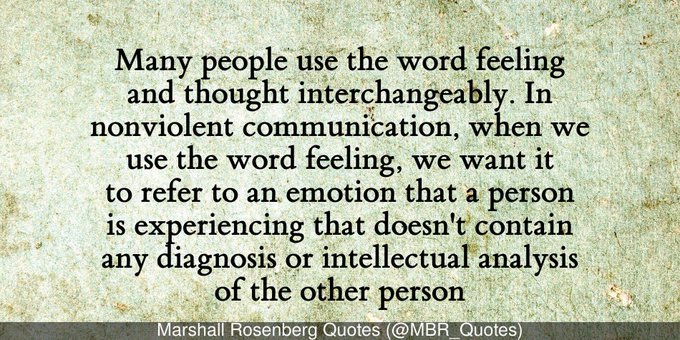
Feelings reflection, NOT guessing
In Rogers-style reflective listening, the listener attends to the “total meaning” of the message, including tone, posture, and other nonverbal cues, and then responds especially to the feeling component that is actually manifest in the communication. When the listener reflects a feeling, it is meant as a careful, non-evaluative hypothesis about what the speaker is already expressing, not a speculative guess pulled from an abstract list of emotions the speaker has never indicated.
https://www.perplexity.ai/search/in-active-listening-what-did-c-D42hS8shTk29OFWloNGtzA
https://lifebuilderscounseling.org/wp-content/uploads/activelistening.pdf
https://r.jordan.im/download/psychology/arnold2014.pdf
Active listening does not necessarily mean long sessions spent listening to grievances, personal or otherwise. It is simply a way of approaching those problems which arise out of the usual day-to-day events of any job.
https://wholebeinginstitute.com/wp-content/uploads/Rogers_Farson_Active-Listening.pdf
How does Rogers distinguish empathy from interpretation of feelings
https://www.perplexity.ai/search/how-does-rogers-distinguish-em-K4NQMqWGR3K8H3YI8hsSGA
Rogers treats empathy as an accurate, moment‑to‑moment entering of the other person’s experiential world, and he contrasts this with interpretation, which adds meanings or motives that go beyond what the person is actually expressing. Empathy stays close to the client’s “internal frame of reference,” while interpretation moves toward the helper’s theory, assumptions, or inferences about what the client really feels or means.
What Rogers means by empathy
For Rogers, empathy is sensing the client’s inner world “as if” it were one’s own, including the felt meanings and emotions, while still knowing it is the other person’s experience, not one’s own. It involves carefully communicating this understanding and checking back so that the client recognizes their own experience in what is reflected, which helps them feel deeply understood and facilitates change.
How interpretation differs
Interpretation, in contrast, involves the listener offering an explanation, hidden meaning, or deeper feeling that the client has not clearly expressed, often drawing on diagnostic or theoretical ideas. Rogers warned that this kind of interpretive stance can make the client feel analyzed or judged, increase defensiveness, and shift the focus away from the client’s lived experiencing toward the therapist’s concepts.
Key elements of the distinction
Empathy tracks the client’s explicit and implicit meanings and feelings as they emerge, staying within what the client is actually communicating.
Interpretation goes beyond that communication, proposing “what is really going on” psychologically, even if the client has not signaled it.
Rogers framed effective helping as privileging empathic understanding and accurate reflection over interpretive moves, especially early in the relationship.


 Carl Rogers
 Marshall Rosenberg
 Richard Schwartz